After the beaches, Sicilian desserts are what our guests ask about most. Fair enough: ricotta, almonds, citrus and honey tell the island's story better than most history books. In this guide we explain which sweets to look for in Cefalù, which feast each one belongs to and what travels well in a suitcase, including the specialities of the Madonie villages, half an hour inland.
By Alessandra, Giuseppe and Salvatore Livecchi · updated October 2026 · 5 min read
Ricotta, almonds and citrus: the basis of Sicilian desserts
Almost all Sicilian pastry comes from a handful of ingredients. The Arabs, who ruled the island between the 9th and 11th centuries, spread sugar cane, citrus and almond growing, which joined the sheep's ricotta that shepherds had always made. In the centuries that followed it was mostly convents, in Palermo and in country towns, that turned these ingredients into the recipes we know today.
The result is a calendar of sweets tied to religious feasts and seasons. Many appear on the Italian Ministry of Agriculture's list of traditional food products (PAT), and today most can be found in pastry shops for much of the year. Knowing which feast they come from, though, tells you when they are at their best.
Cannoli and cassata, the two icons
We have already introduced both in our guide to what to eat in Cefalù. Here are a few extra details that will make you look at the pastry counter differently.
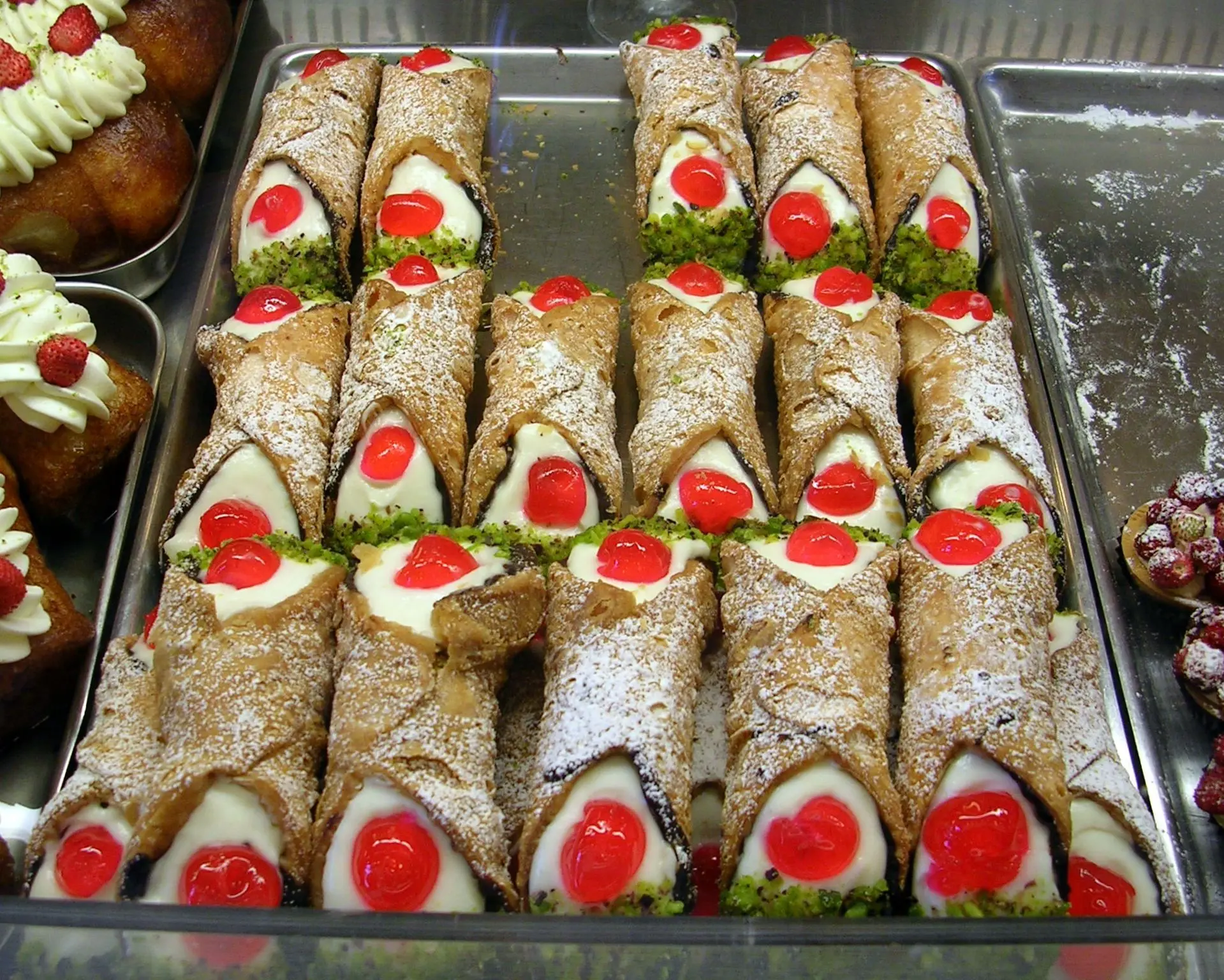
Cannoli
Tradition places their birth in Caltanissetta, possibly in a convent, as a Carnival treat. The shell is made with flour, sugar, lard and Marsala wine, wrapped around a tube and fried; the name recalls the river reeds once used instead of metal cylinders. The classic filling is sieved, sweetened sheep's ricotta. A good sign in any pastry shop is seeing them filled to order, so the shell stays crisp.
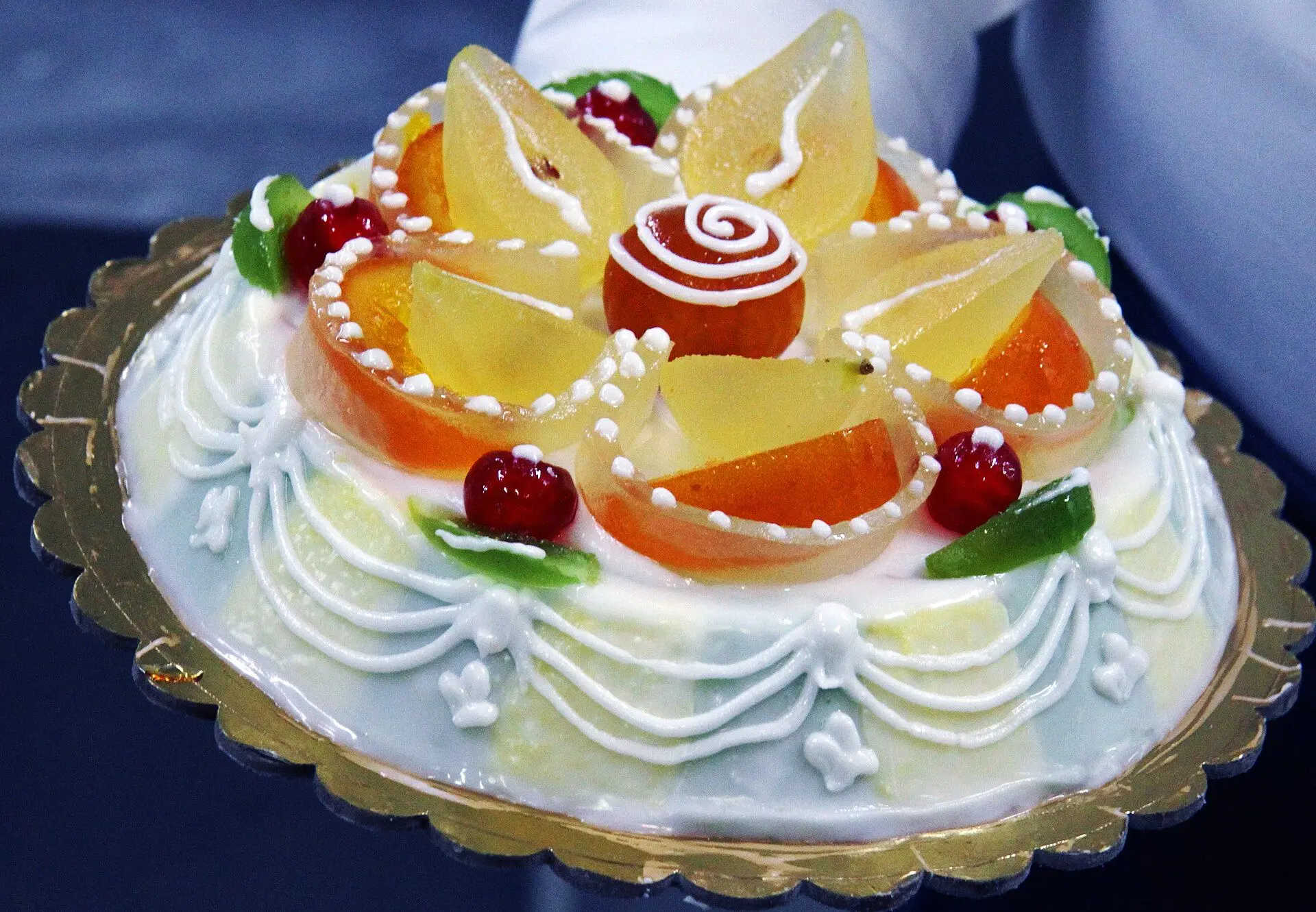
Cassata
Sponge cake, sweetened ricotta, green marzipan and candied fruit under a white glaze. It has been documented since the 14th century, and in 1575 a church synod in Mazara del Vallo already called it essential for feast days. A Sicilian proverb pities anyone who does not eat cassata on Easter morning. At Easter it is everywhere, but many pastry shops make it all year, including a single-portion cassatina.
Granita and brioche, the summer breakfast
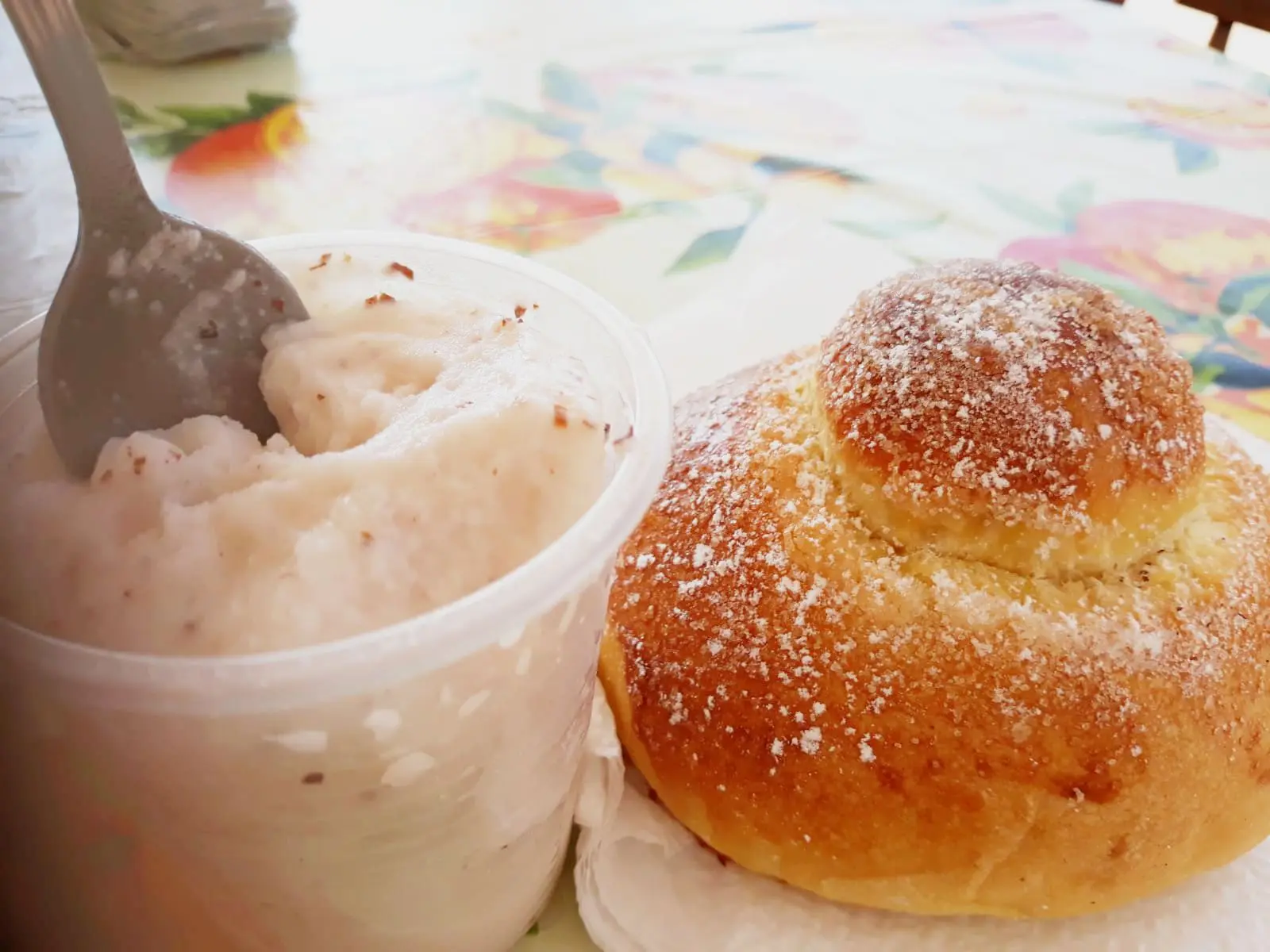
In summer, in Cefalù as across Sicily, the favourite breakfast is granita with a brioche col tuppo, a soft sweet bun with a little topknot, made for dipping. The roots go back a long way: before refrigeration, snow was gathered in the mountains and stored in snow pits, while the brioche habit only took hold in the 20th century.
Lemon, almond and black mulberry granita all feature on Sicily's list of traditional products. Coffee, often topped with whipped cream, pistachio and seasonal fruit complete the line-up. Our advice: try a different flavour every morning.
Marzipan fruit and almond biscuits
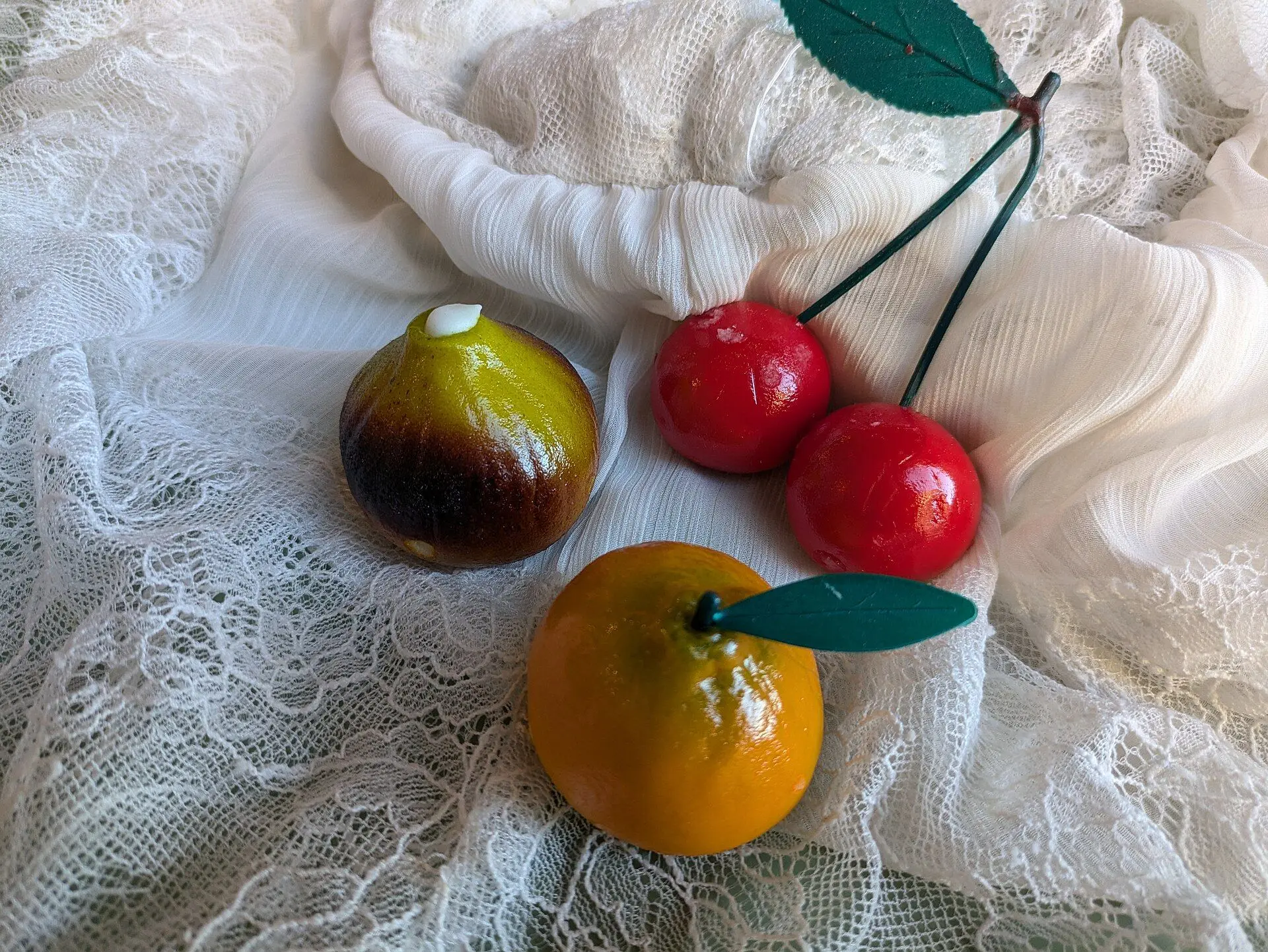
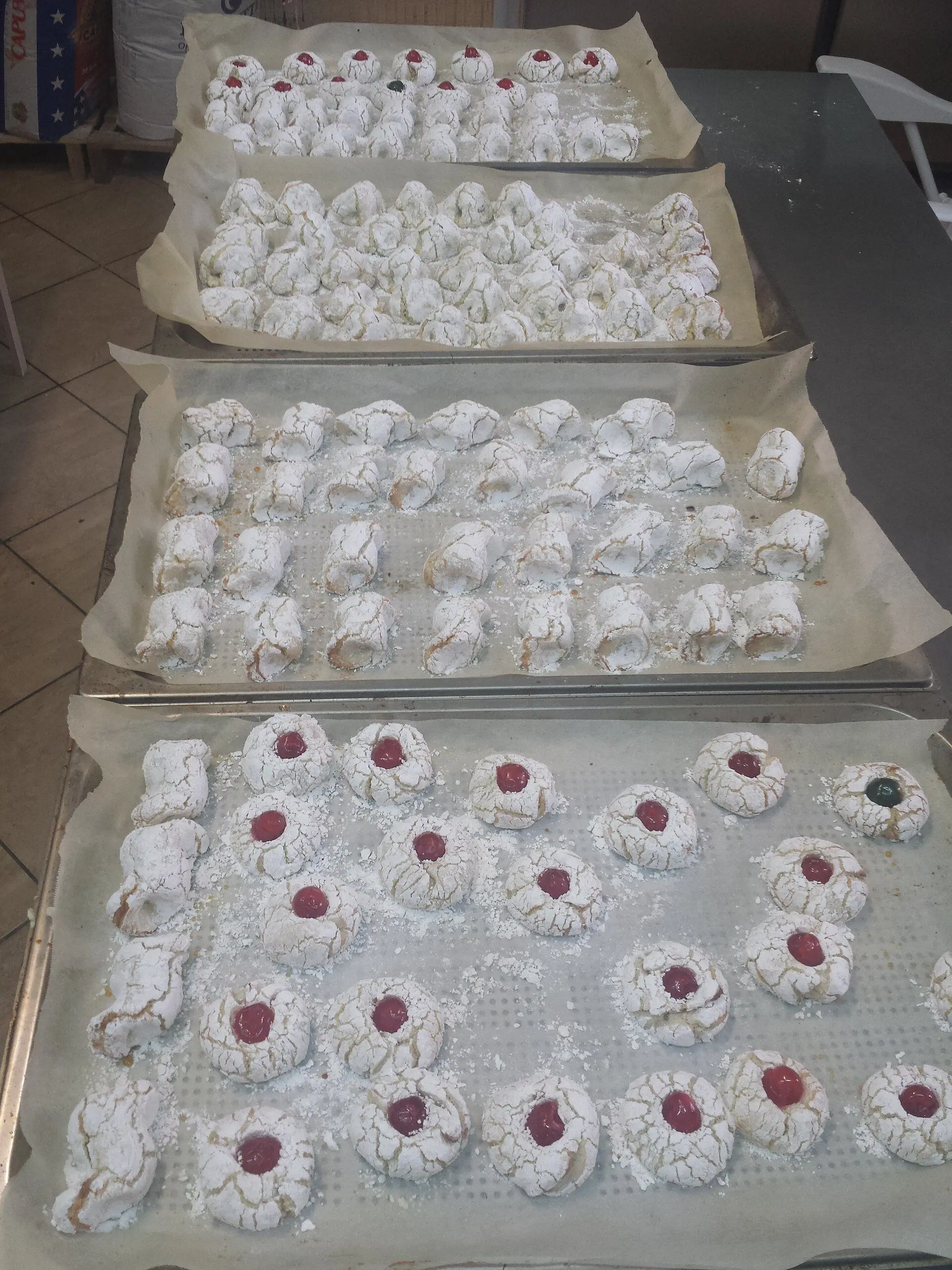
Almond paste, known in Sicily as pasta reale, or royal paste, is a mix of almonds and sugar used in countless sweets. Tradition says it was born at the Martorana convent in Palermo, founded in 1194 by Eloisa Martorana. The nuns shaped it into fake fruit to decorate the bare trees of their garden for an important visitor, and that is the origin of frutta martorana: little oranges, prickly pears and peaches, hand-painted and realistic enough to fool you.
The same paste makes almond biscuits, soft inside and crisp outside, topped with a whole almond, a candied cherry or pine nuts. They keep well and travel easily, which makes them one of the most practical souvenirs to pack.
Typical Sicilian sweets through the year
Many Sicilian sweets belong to a particular date. If your stay coincides with one of these occasions, it is the perfect moment to try them, when they are freshest and easiest to find.
March: sfince for St Joseph
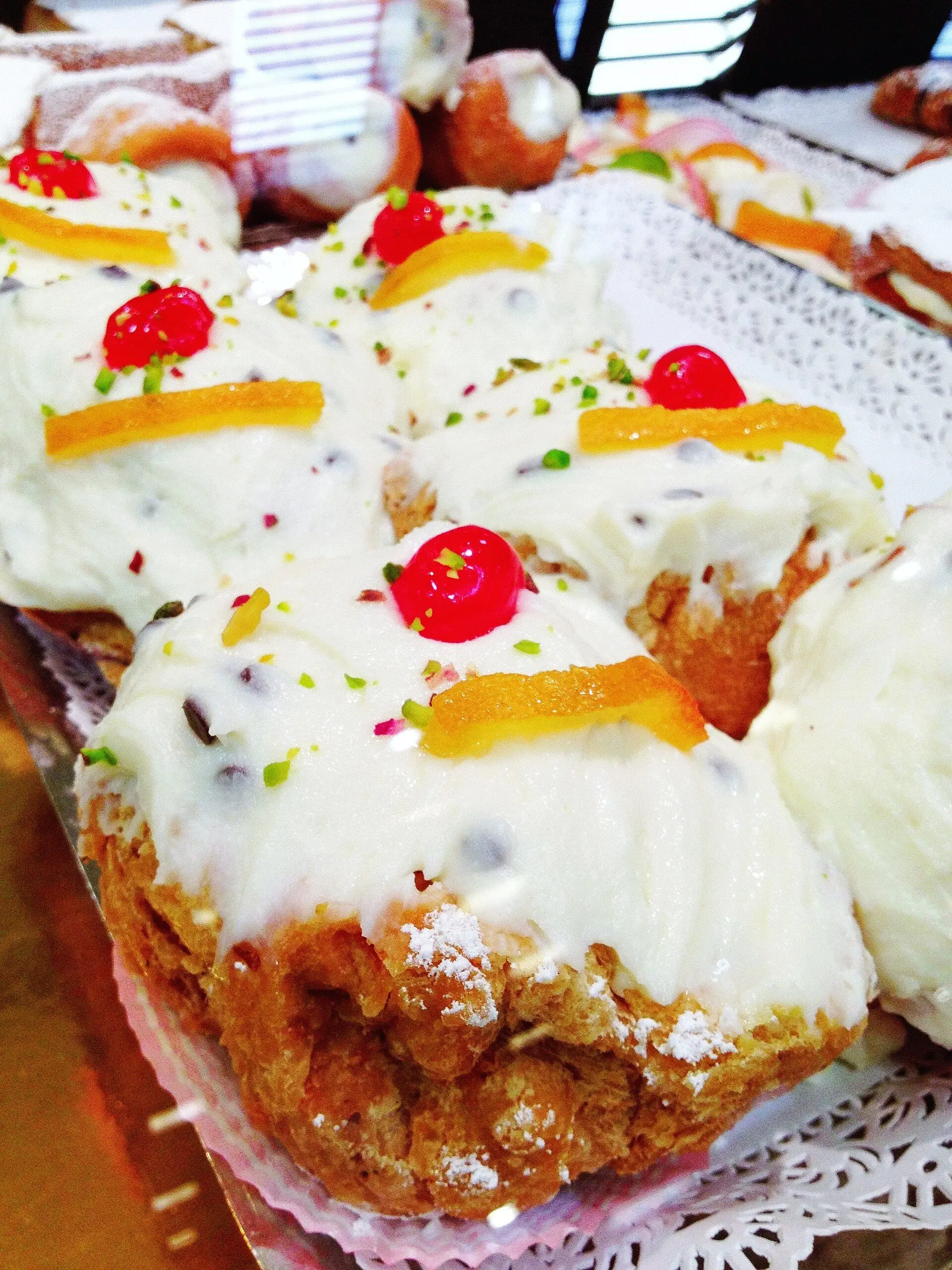
For 19 March, the feast of St Joseph, pastry shops around Palermo make sfince: soft, sponge-like fritters topped with ricotta cream, candied orange peel and a cherry. Tradition credits their modern form to the nuns of the Stigmata of St Francis convent in Palermo.
November: the Day of the Dead
On the night between 1 and 2 November, according to Sicilian custom, departed relatives bring presents and sweets to children. It is the season of marzipan fruit, of brightly painted sugar figures called pupi di zucchero or pupaccena, and of biscuits known as ossa di morto, dead men's bones. By late October, pastry shop windows are a sight in themselves.
December: cuccìa, buccellato and nougat
On 13 December, St Lucy's day, people around Palermo avoid bread and pasta in memory of a famine that, legend says, ended when a ship loaded with grain reached the port. Instead they eat cuccìa, boiled wheat enriched with ricotta and chocolate. Christmas brings buccellato, a ring of shortcrust pastry filled with dried figs, almonds, walnuts, orange peel, honey and Marsala. Nougat is on festive tables too: the torrone of Caltanissetta, made only with honey, almonds and pistachios, has been a Slow Food Presidium since 2023.
Sweets from the Madonie: manna, testa di turco and sfoglio
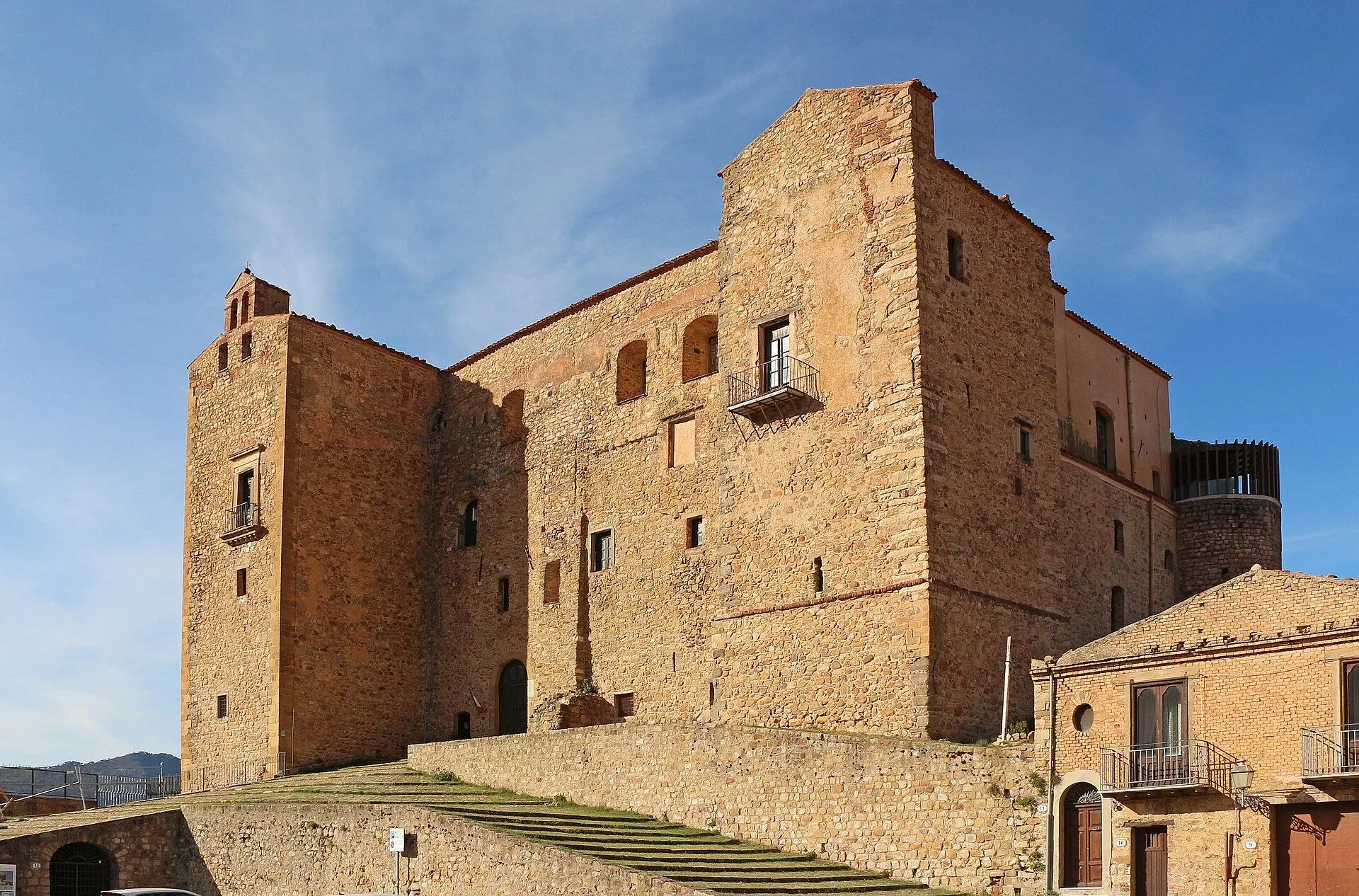
Behind Cefalù rise the Madonie mountains, home to some of the area's most unusual sweets. In Castelbuono and Pollina people still harvest manna, the sap that seeps in July and August from cuts in the bark of ash trees and hardens in the sun. It is a Slow Food Presidium and a natural sweetener that local pastry shops use in cakes, biscuits and creams.
Castelbuono is also home to testa di turco, a spoon dessert of fried pastry sheets layered with a milk cream scented with lemon and cinnamon, made mostly in the colder months. Its name, literally 'Turk's head', is said in local lore to recall old battles against the Saracens. In Polizzi Generosa they make sfoglio instead, a shortcrust tart filled with fresh tuma cheese, chocolate, candied citron and cinnamon, which tradition attributes to the town's Benedictine nuns. Both are on Sicily's list of traditional products, and a day in the Madonie villages is one of the day trips from Cefalù we most recommend to anyone with a sweet tooth.
Where to try Sicilian desserts in Cefalù
In the old town and along the main street you will find pastry shops and cafés making cannoli, cassata, granita and almond pastries. Rather than give you a single address, we suggest a few things to look for: cannoli filled to order, homemade granita with seasonal fruit, and windows that change with the feasts. For the names of the most highly rated places, we have gathered what the guides say on our page about the best restaurants in Cefalù.
If you stay at the Casa del Duomo, a granita breakfast is a few steps from the front door. From the Villa dei Mandarini and Villa dei Limoni, the town centre is a few minutes away by train. For the journey home, nougat, almond biscuits and a little jar of manna pack easily; fresh ricotta pastries are best enjoyed here. Any questions, just ask us: this is a subject we never tire of.