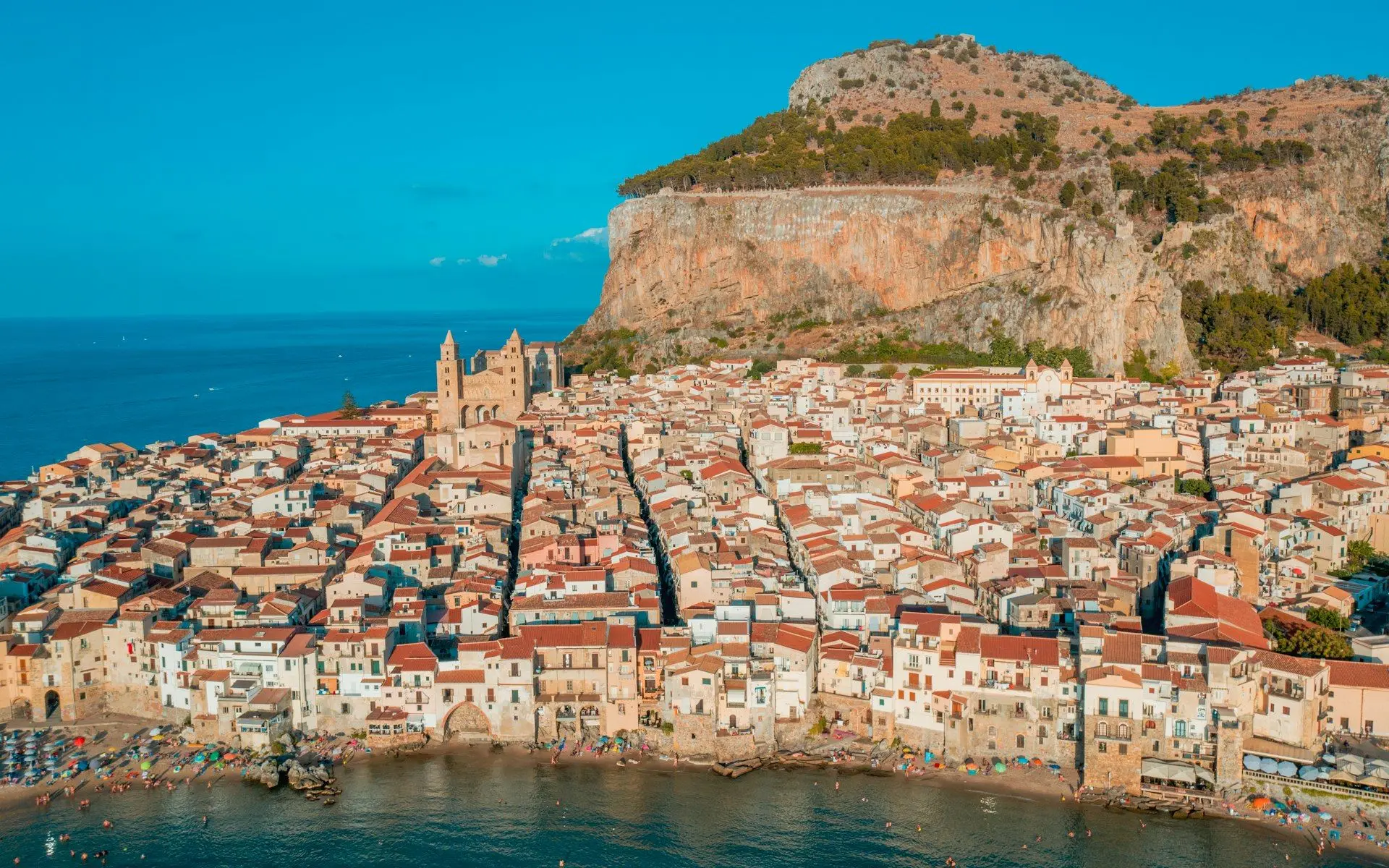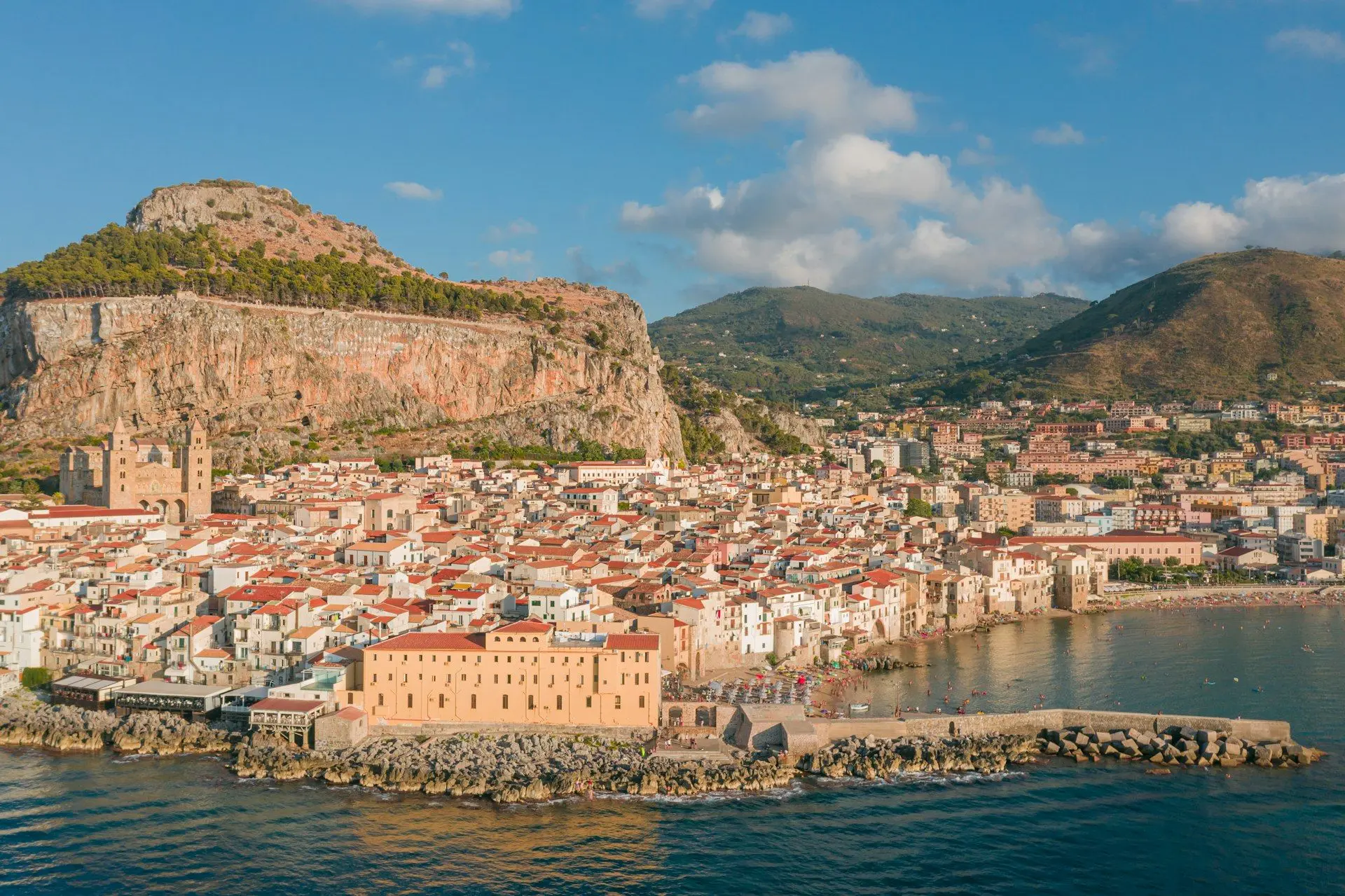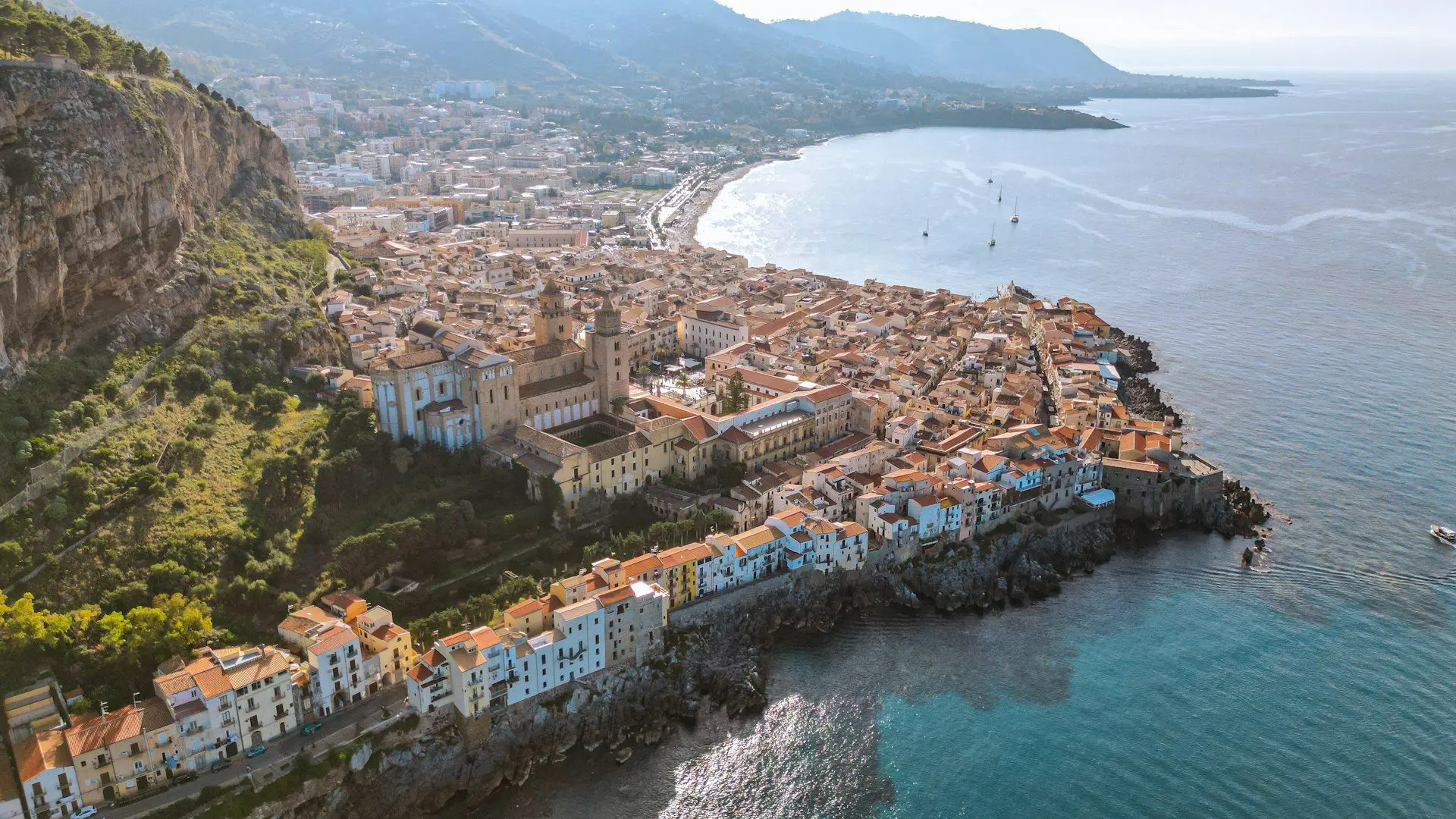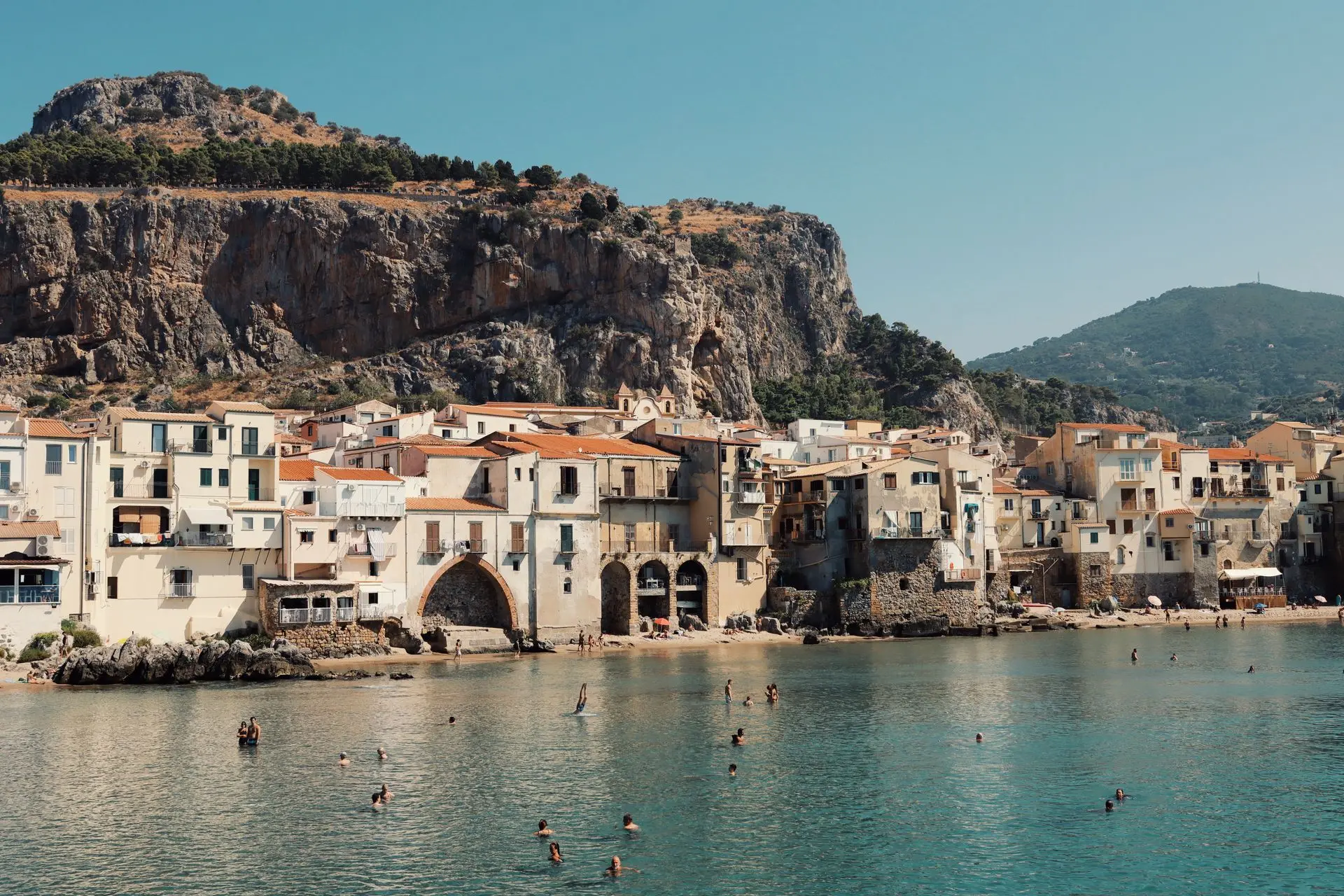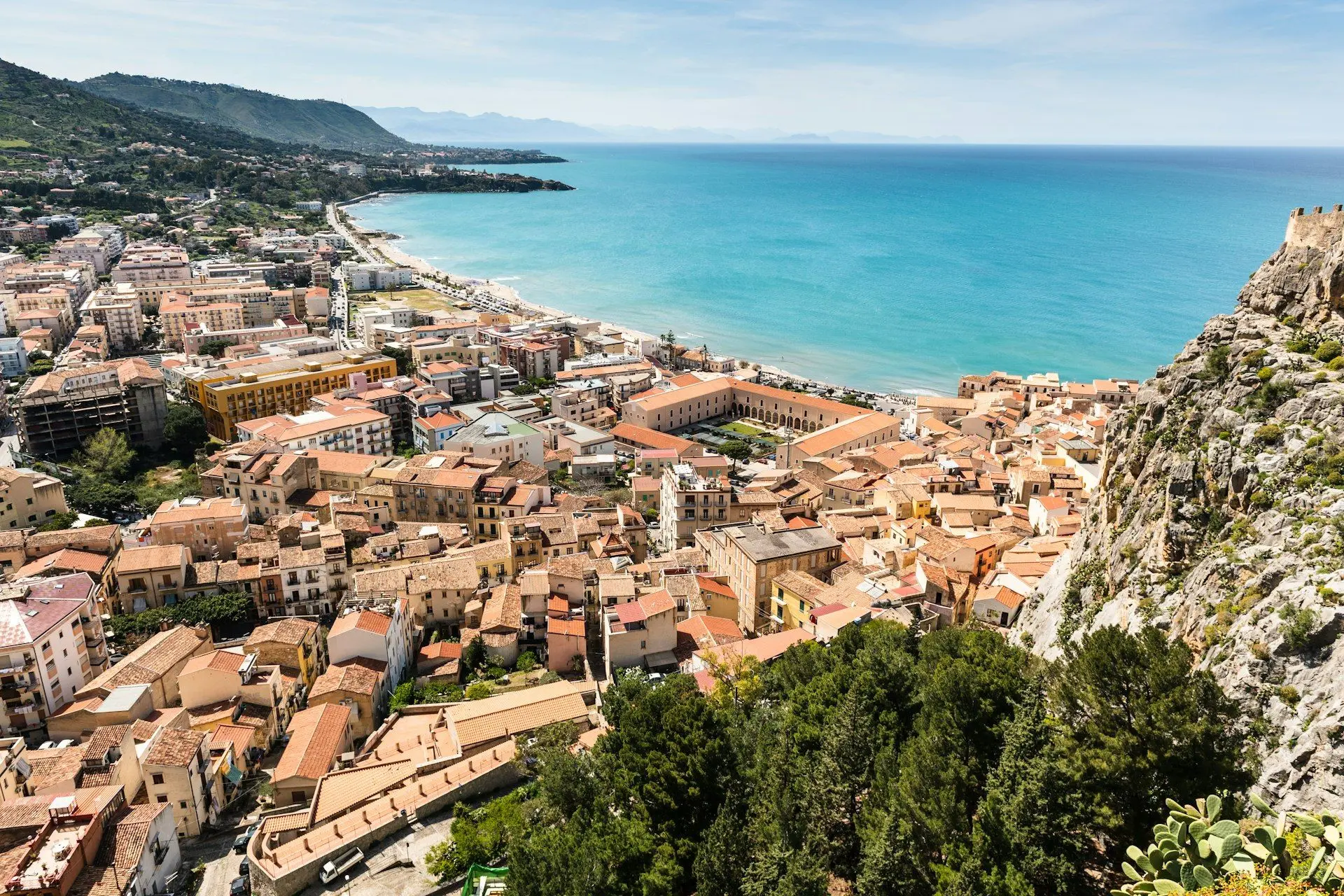
The Rocca di Cefalù is the limestone headland, about 270 metres high, that towers over the old town. You walk up in roughly an hour on the trail that starts at Salita Saraceni, pay a small entrance fee to the park, and at the top you find medieval walls, the Temple of Diana, the ruins of a castle and the widest view there is over Cefalù and the coast. We look at it every day from home, so here is everything you need to plan the hike, checked against official sources.
By Alessandra, Giuseppe and Salvatore Livecchi · updated October 2026 · 7 min read
The Rocca di Cefalù hike at a glance
Reaching the top of the Rocca takes about an hour of walking, on a paved, stepped path at first and on rockier ground higher up. The town council gives the Rocca a height of 270 metres above sea level; the trail starts just above the old town, so you climb roughly 250 metres. The full outing, up, around the loop at the top and back down, is about 3 kilometres.
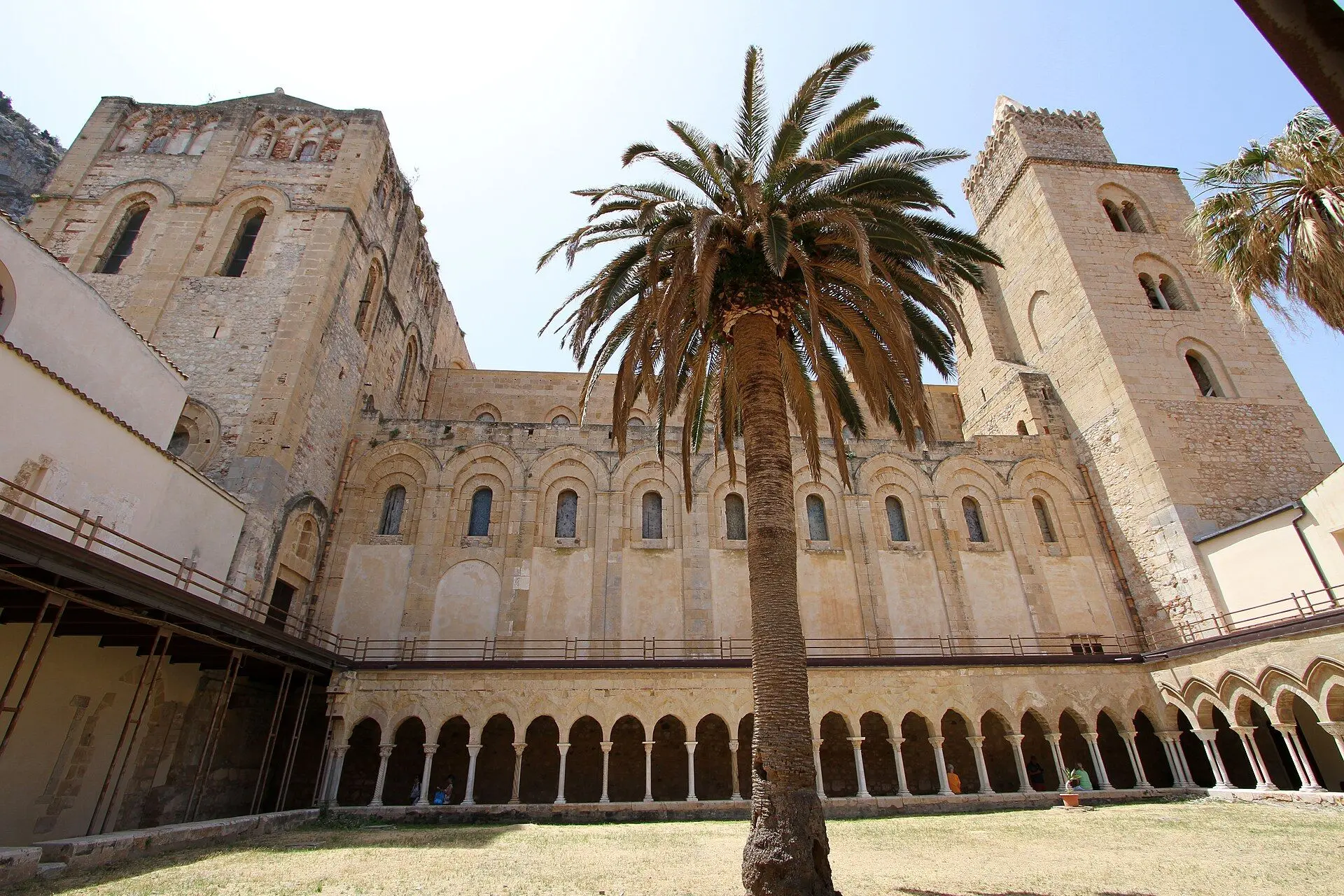
For an unhurried visit with stops at the Temple of Diana, the viewpoints and the castle, allow two to three hours. You don't need to be a seasoned hiker, but you do need closed shoes with a proper tread (that is an entry rule, not just advice) and a reasonable level of fitness, especially in the heat. For the history of the town's monuments, cathedral included, see our guide to Cefalù's monuments: this page is all about the climb.
Where the trail starts: Piazza Garibaldi and Salita Saraceni
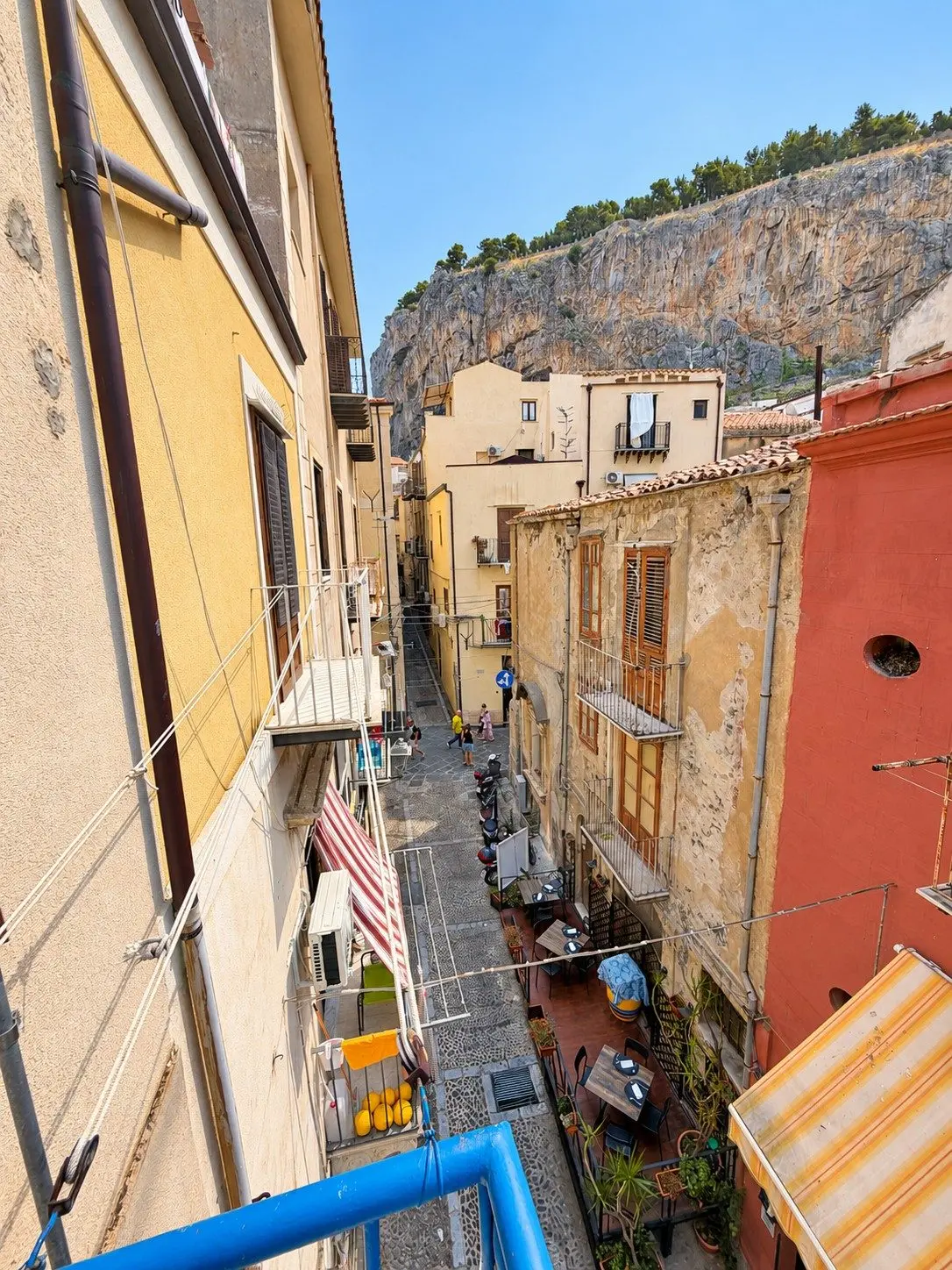
The way into the Rocca park is from Piazza Garibaldi, where Corso Ruggero meets the upper part of the old town, up the lane called Salita Saraceni. The council names "Piazza Garibaldi/Salita Saraceni" as the access point. You climb a few hundred metres between the houses to the gate, where the ticket office is.
You can't drive to the gate, as the old town is a limited traffic zone. If you arrive by train, Cefalù station is less than a kilometre from the entrance, about ten minutes on foot. For every way of getting to town, parking included, read our guide on how to get to Cefalù.
How long the climb takes and how hard it is
At a normal pace you reach the halfway plateau in about 40 minutes and the summit in just under half an hour more. Coming down is quicker, but take it steady on the polished limestone. The route is graded as an easy tourist path: there are no exposed sections and no scrambling, but the gradient is constant.
The first stretch is made of large stone steps zigzagging up the side of the Rocca. Past the second line of walls the path splits into a loop: one branch heads for the castle, the other passes the Temple of Diana and the battlemented walls above the town. Higher up there are hardly any trees, so shade is scarce.
Regular walkers find it an easy climb; people who aren't used to it find it tiring, above all in the hot hours. Our advice is to take your time: the stops at the viewpoints are part of the experience.
What you see along the way
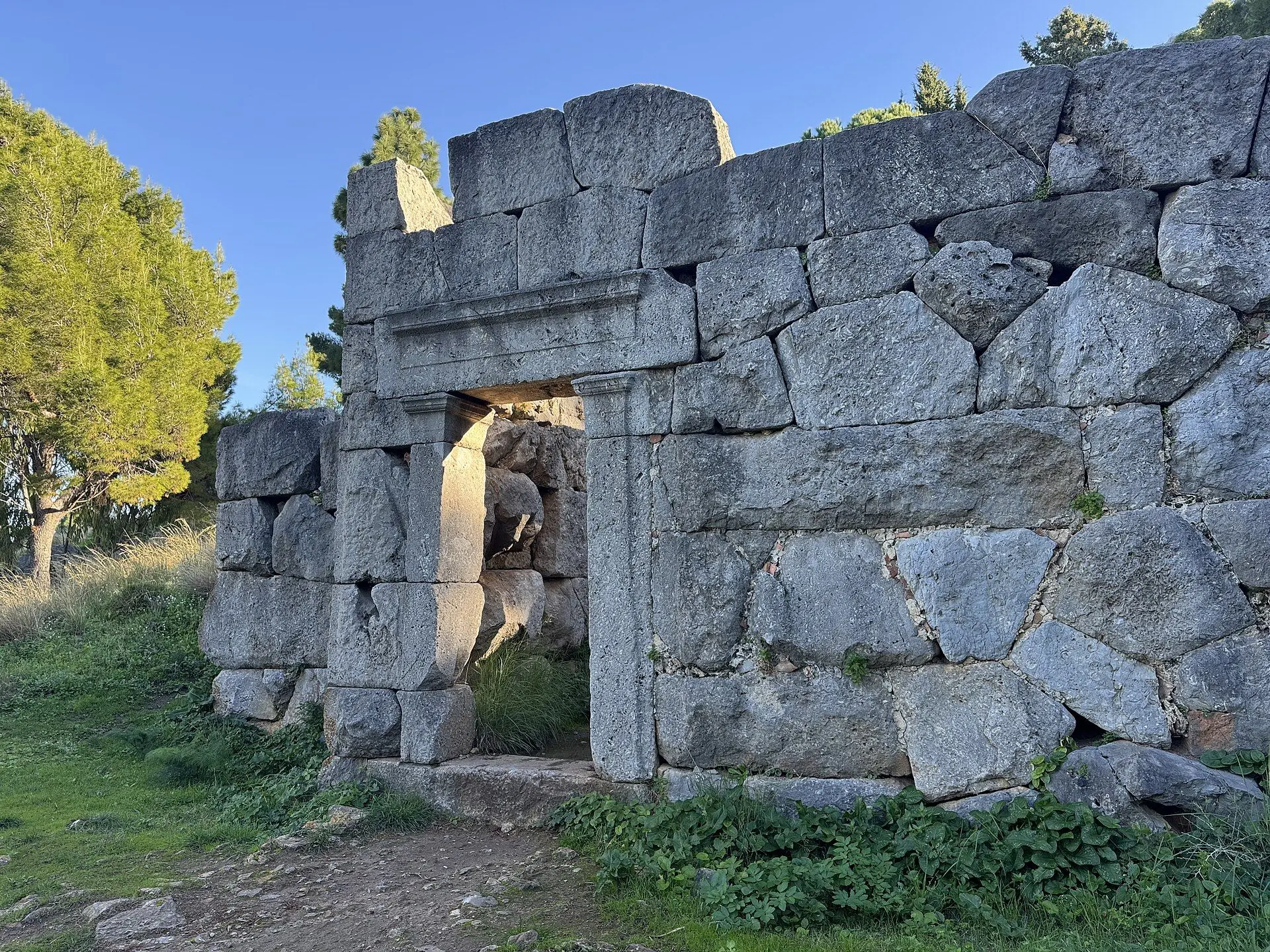
The Rocca is an open-air archaeological park, with structures from very different periods side by side. This is roughly what you meet on the way up.
Walls and fortifications
Soon after the entrance you pass through the first line of defences, a wall with a gateway and small guard buildings, rebuilt in the 16th century on older medieval foundations. Higher up there is a second ring of walls and, on the town side, a long stretch of battlements from which you look straight down on the rooftops and the cathedral.
The Temple of Diana
This is the oldest and most debated building on the Rocca: a megalithic structure of huge stone blocks whose purpose, as the council itself notes, is still uncertain. Its phases range from a cistern of the 9th century BC, possibly linked to a water cult, to later Greek, Roman and Byzantine alterations, when it became a church. The name "Diana" is traditional and shouldn't be taken literally.
Sant'Anna, the cisterns and the medieval houses
Between the temple and the summit you walk past the remains of houses, small Byzantine and medieval churches including Sant'Anna, and several cisterns for collecting rainwater, the largest known as the Cisterna Grande. They are traces of a time when a community actually lived up here.
The castle at the summit
At the top, around 270 metres, stand the ruins of the castle, built between the 12th and 13th centuries and altered later. From here the view is complete: the town, the harbour, the coast towards Palermo and towards Messina and, on clear days, the Aeolian Islands on the horizon.
Rocca di Cefalù tickets and opening hours
Entry to the Rocca is ticketed and run by the Comune di Cefalù. According to the council's official page, a full ticket costs 5 euros and a reduced one 2.50 euros (children aged 6 to 14, adults over 65 and teachers); residents get in free.
Opening hours change with the seasons, and last entry is two hours before closing. For 2026 the council lists 8am to 8pm in the summer period, last entry 6pm; 8am to 7pm in spring and from mid-September, last entry 5pm; and 8am to 5pm once the clocks go back, last entry 3pm. The exact changeover dates can shift from year to year, so check the council page or ask at the ticket office before you plan around them.
The park can also close for safety reasons: it has happened, for example, during Civil Protection weather alerts, when the council shuts parks and sports facilities too. In heavy rain or strong wind the climb isn't a good idea anyway, because wet limestone gets slippery.
When to go and what to bring
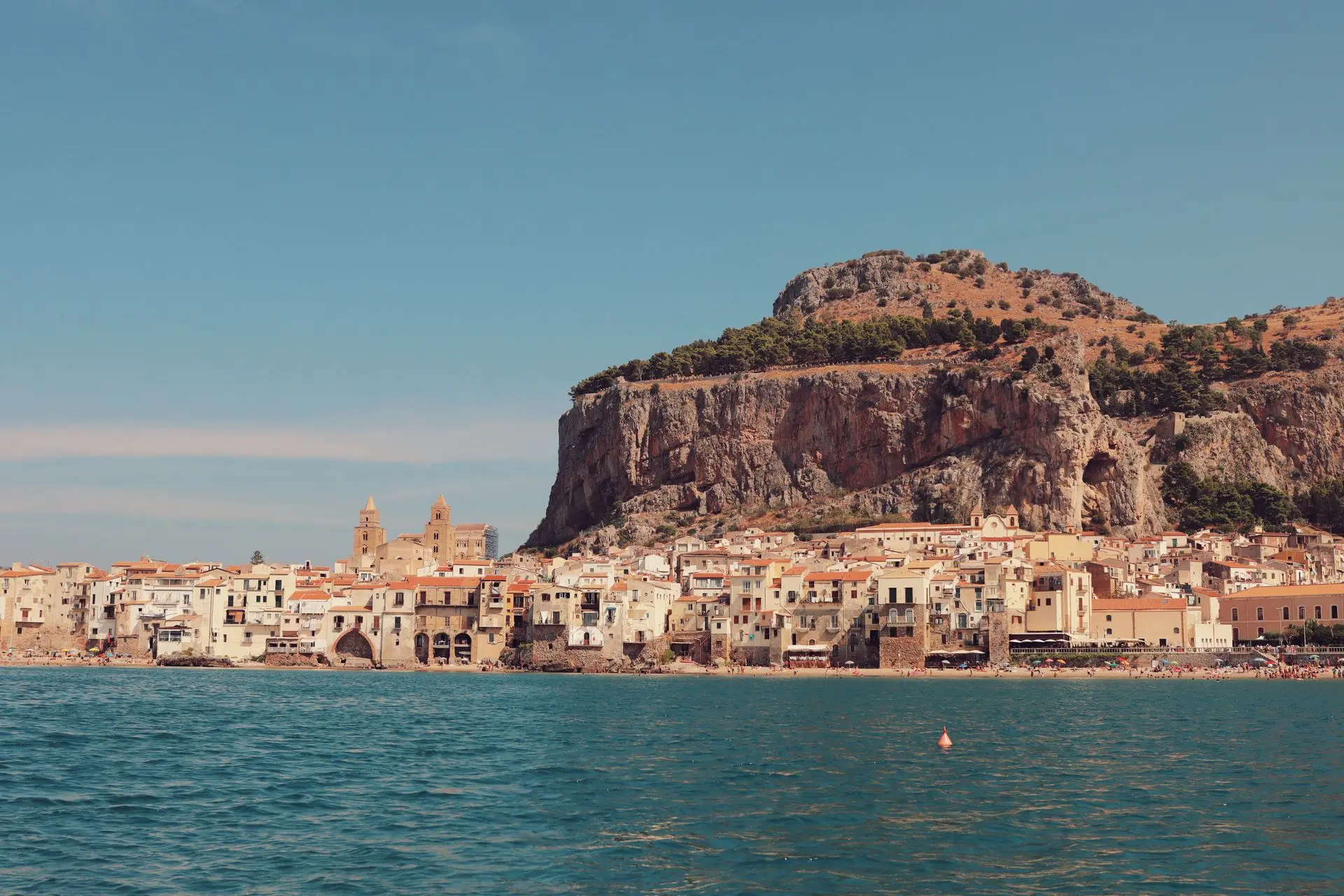
The best time is the morning, as soon as the park opens. In spring and autumn the temperature is pleasant at almost any hour and the light is clear. From June to September, though, skip the middle of the day: the path is exposed and the limestone radiates heat. Going up at opening time means cool air, few people and the town still quiet below you.
Late afternoon is the other good option, but keep an eye on last entry, two hours before closing. The park shuts before dark, so this is not a spot to wait for sunset from the summit: enjoy the warm evening light on the way down, then catch the sunset itself from the seafront or the old harbour.
What to bring: closed shoes with a grippy sole (sandals, flip-flops and smooth soles are not allowed in), at least a litre of water each, a hat and sunscreen in summer, a light jacket on windy days. Don't count on a bar or a drinking fountain at the top, so set off with everything you need. A small backpack keeps your hands free on the steps.
The Rocca with children and older visitors
It's doable with kids, with a little care. Under-18s must be with an adult (a park rule) and children aged 6 to 14 pay the reduced fare. Children who enjoy walking reach the top without trouble; for little ones a pushchair is no use on steps and rock, so bring a baby carrier. Keep them close along the walls and at the viewpoints.
For anyone with limited mobility or bad knees, the high steps and the descent on limestone are the hardest part. The trail is not wheelchair accessible. A good compromise is to go as far as the first walls or the first viewpoint, which already gives a fine view over the town, and head back at an easy pace without aiming for the summit.
If heat or effort is an issue, you can get a rooftop view without the climb: the terraces of the cathedral towers, visited on the cathedral's paid routes, are a shorter alternative. More ideas for days in town are in our guide to the best things to do in Cefalù.
The best photos from the Rocca
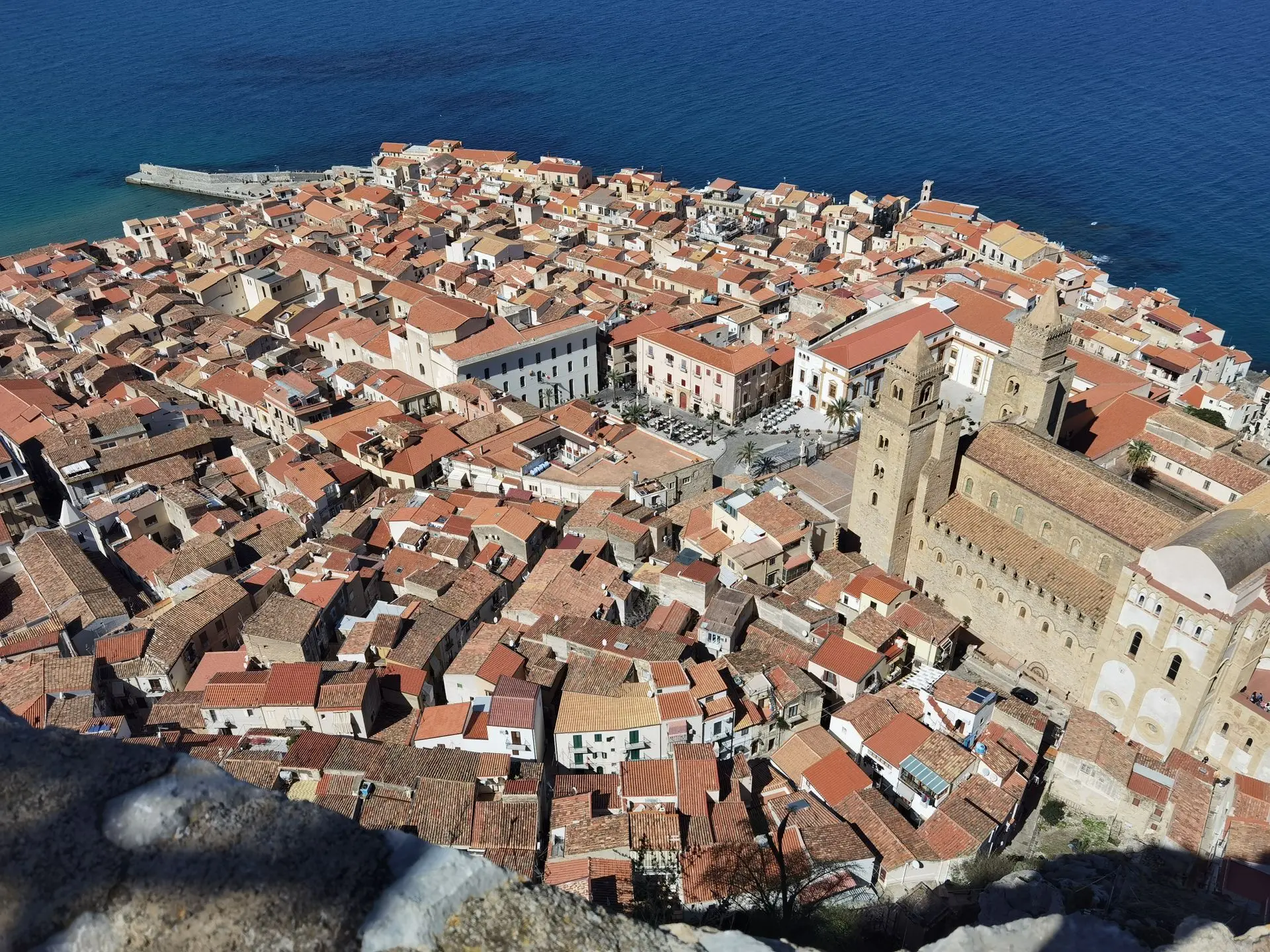
The classic shot is from the battlements above the town: tiled roofs, the two cathedral towers and the town beach all in one frame. In the morning the sun comes from the east and lights up the cathedral front and the bay to the west nicely.
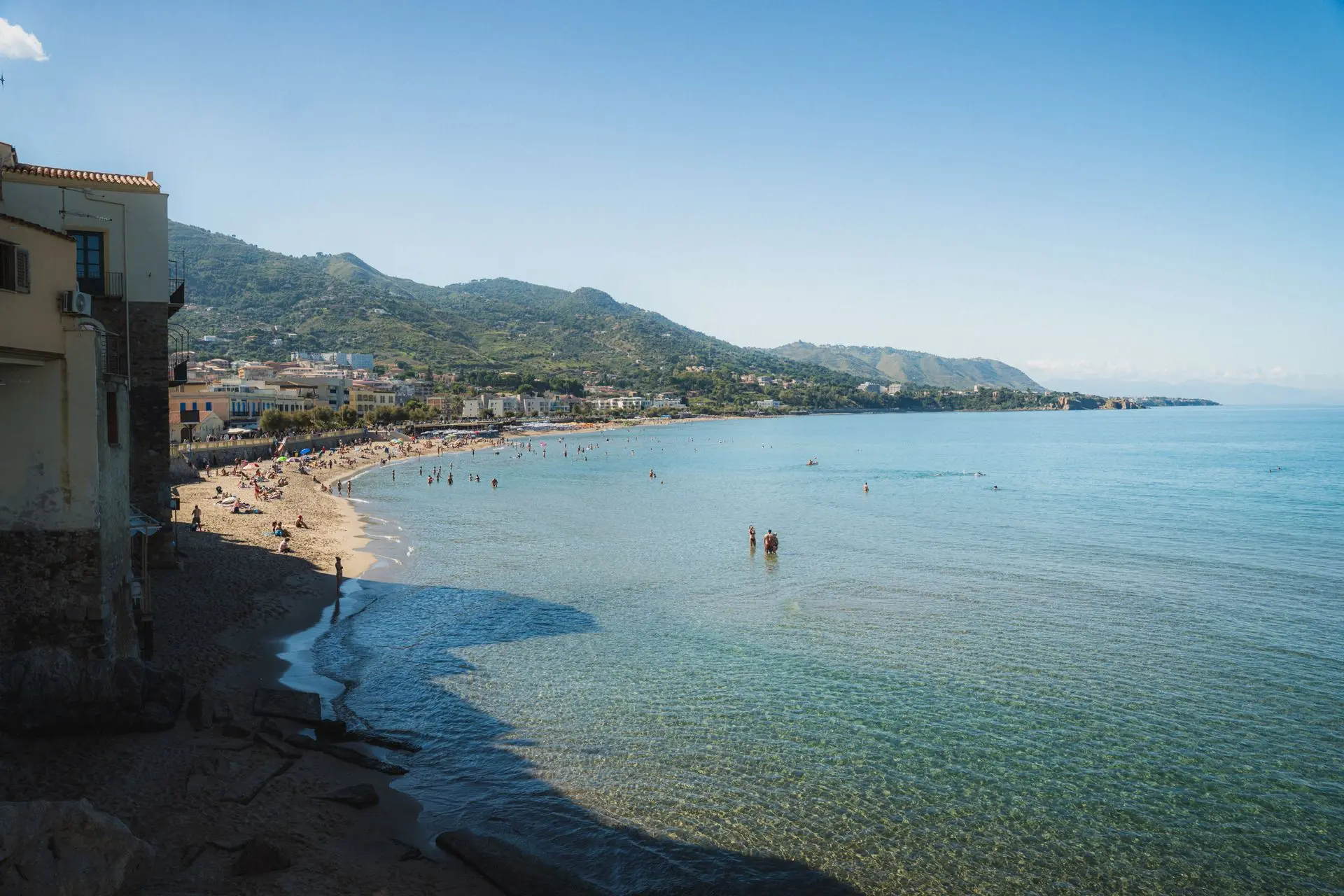
From the summit, near the castle, you can take in the whole bay and, when the air is clear, the outline of the Aeolian Islands. At the Temple of Diana a wide-angle lens or your phone's panorama mode helps fit in the huge stone blocks. A practical tip: stop to take pictures rather than shooting while walking down steps, and always stay on the path, since leaving the marked trails is forbidden. From the beach at the end of the day the Rocca itself becomes the subject, glowing orange in the late light; the beaches with the best view are in our Cefalù beaches guide.
Hiking the Rocca from our houses
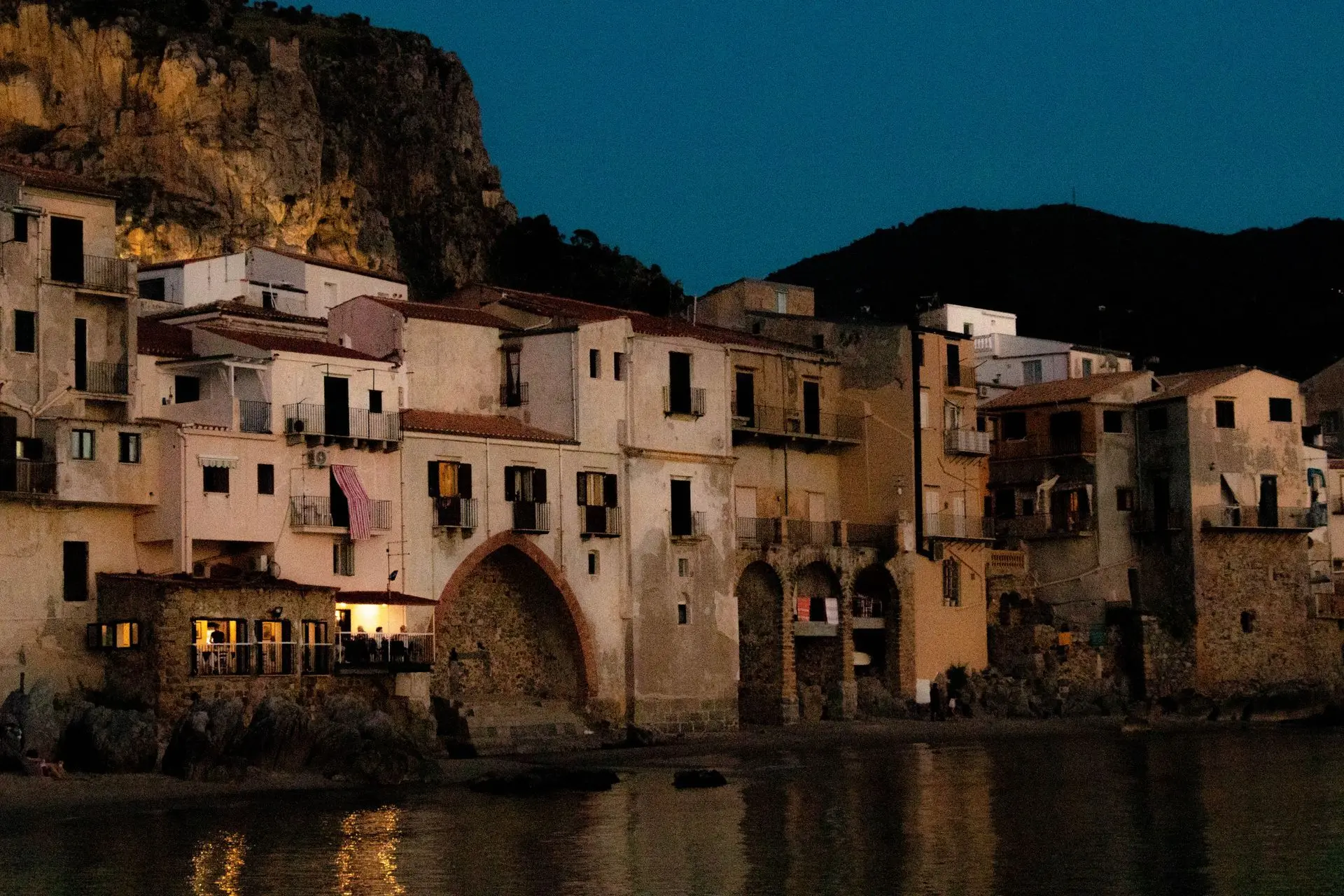
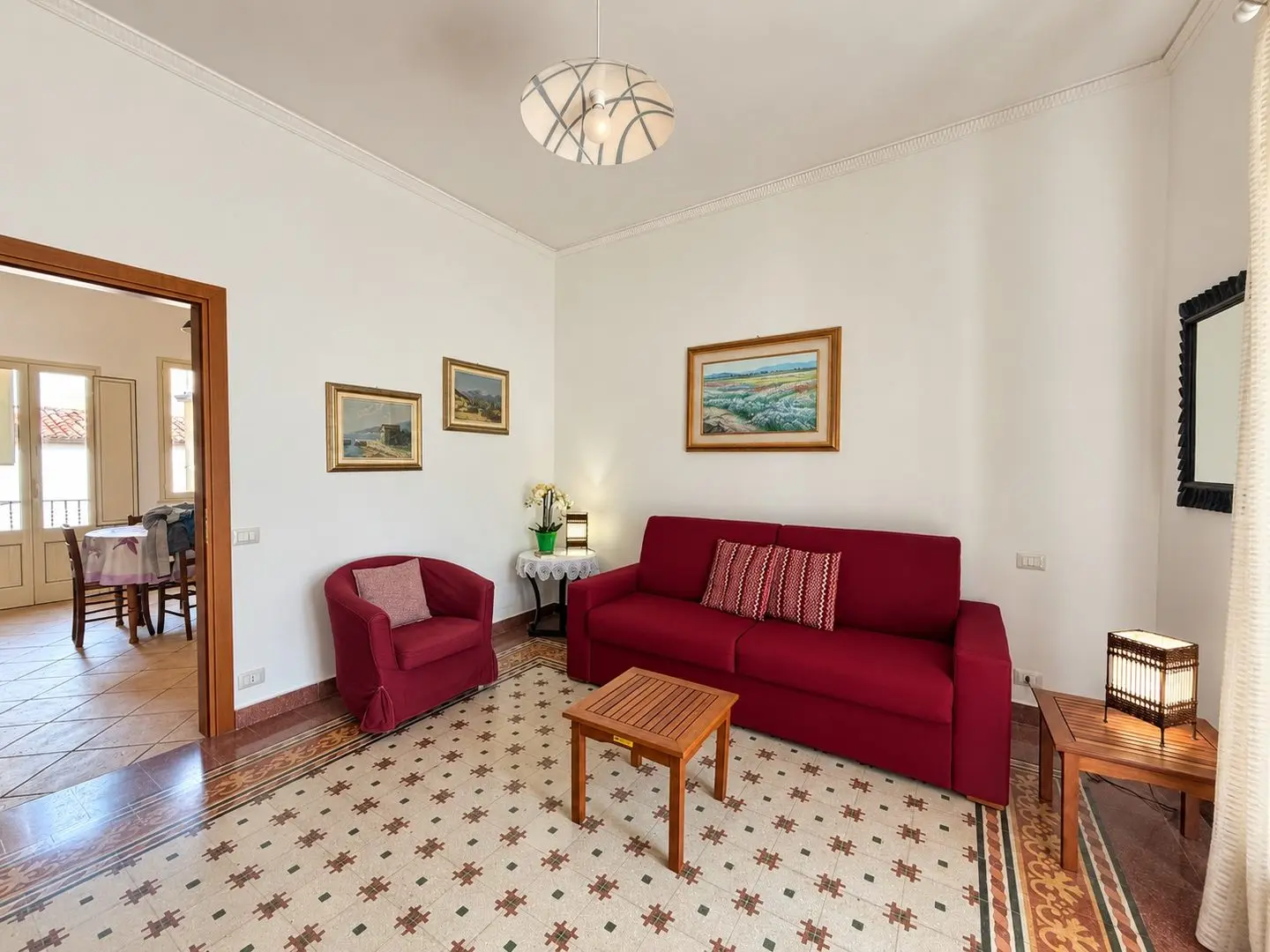
From Casa del Duomo on Via Gioeni, the start of Salita Saraceni is a few minutes' walk across the old town: you can head out at opening time, climb in the cool, and be back for a shower before the beach. And from the balcony you already have the Rocca in view.
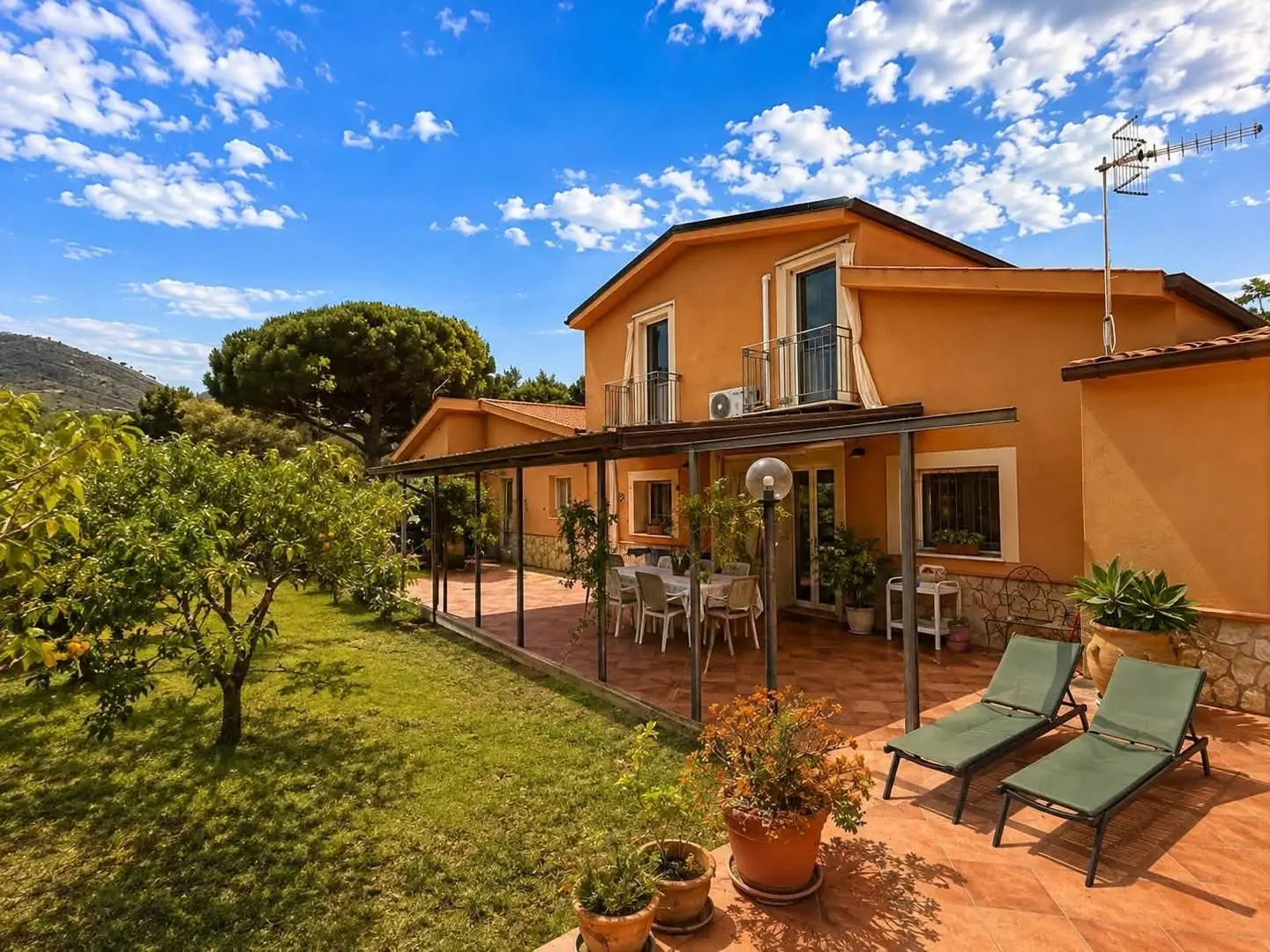
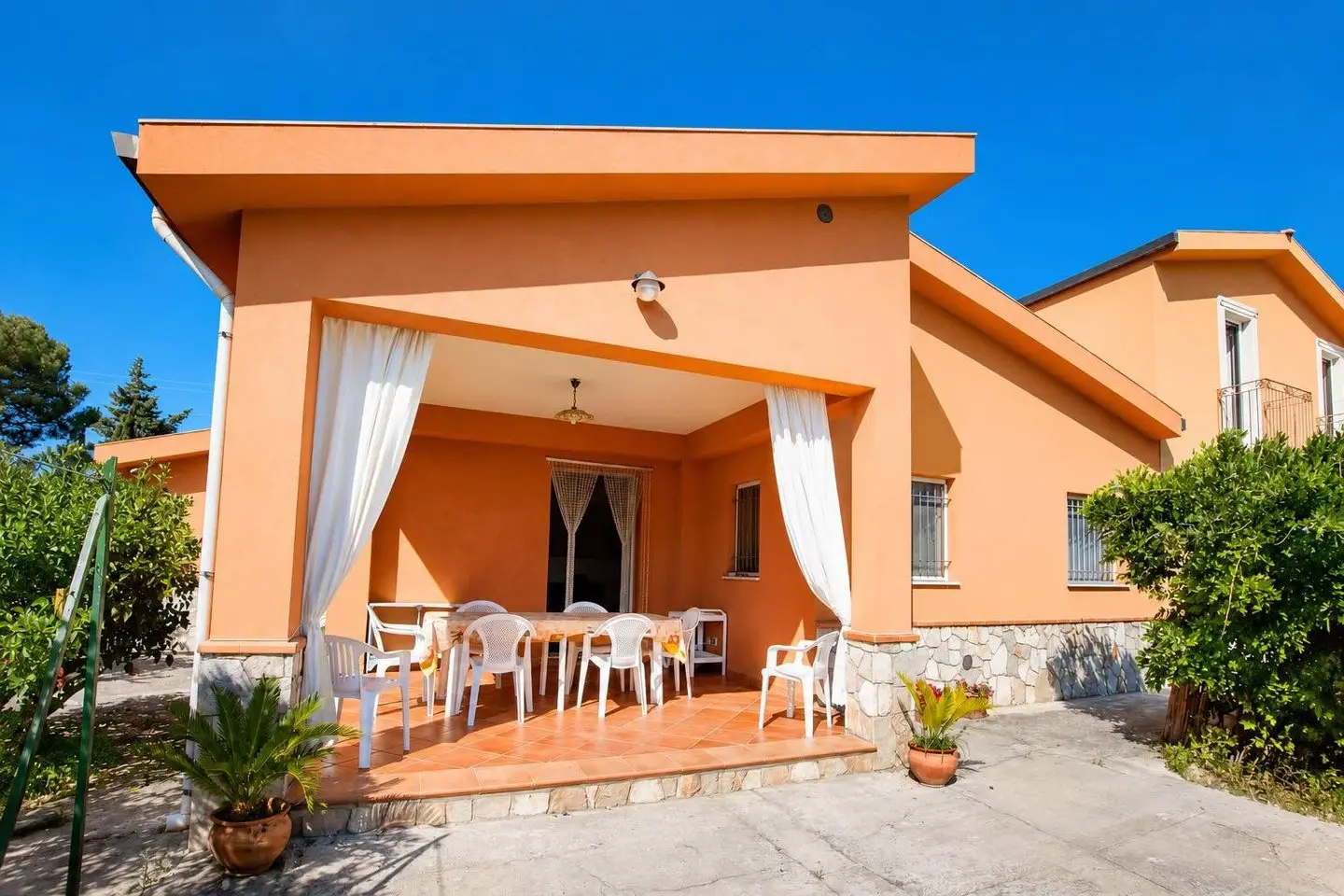
From Villa dei Limoni and Villa dei Mandarini, at Salinelle, the easiest option is the train from Lascari station, less than a kilometre away: Cefalù is under ten minutes down the line and you walk from the station to the entrance, with no hunting for parking in the centre. Afterwards the sea and your private parking are waiting back at the villa.