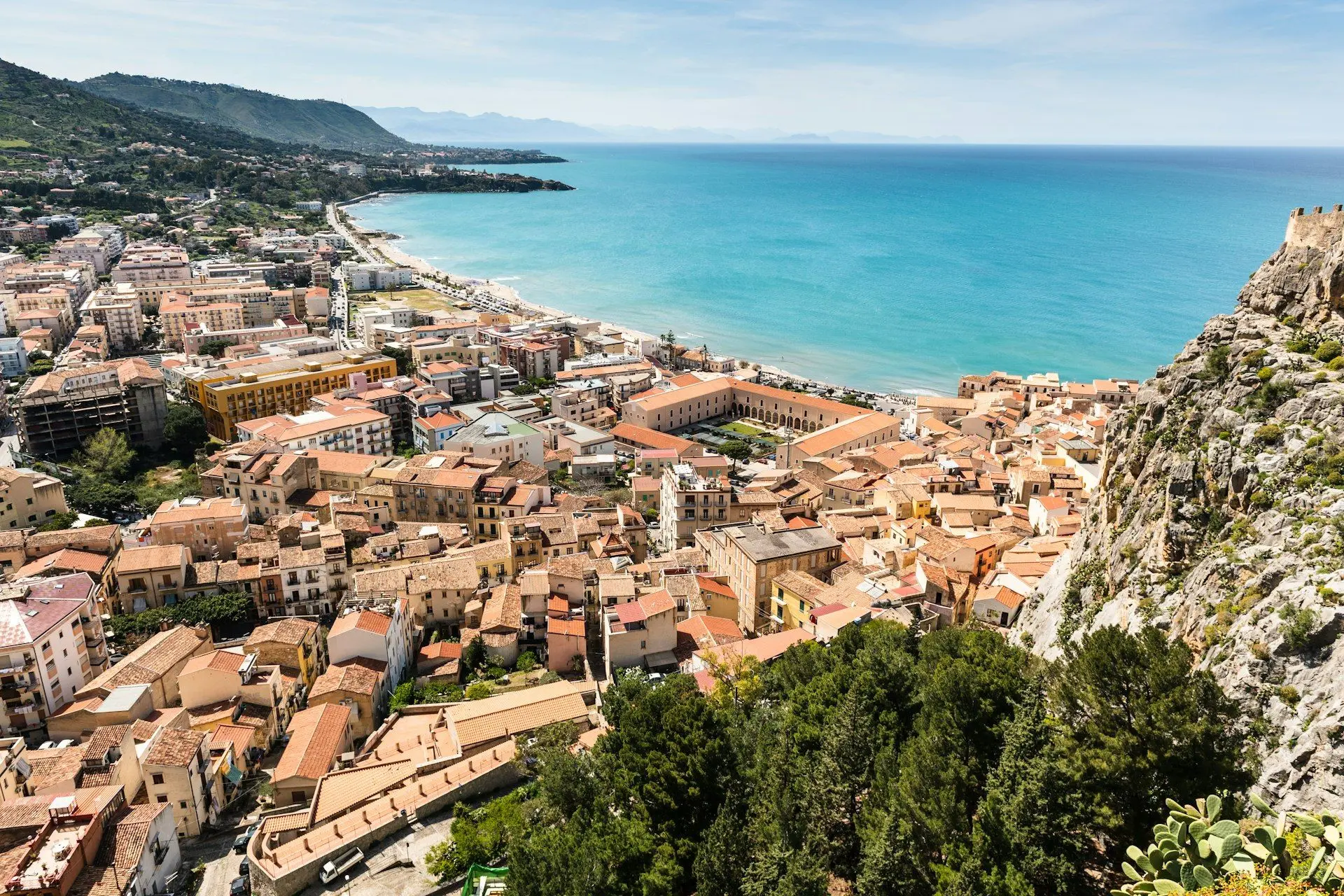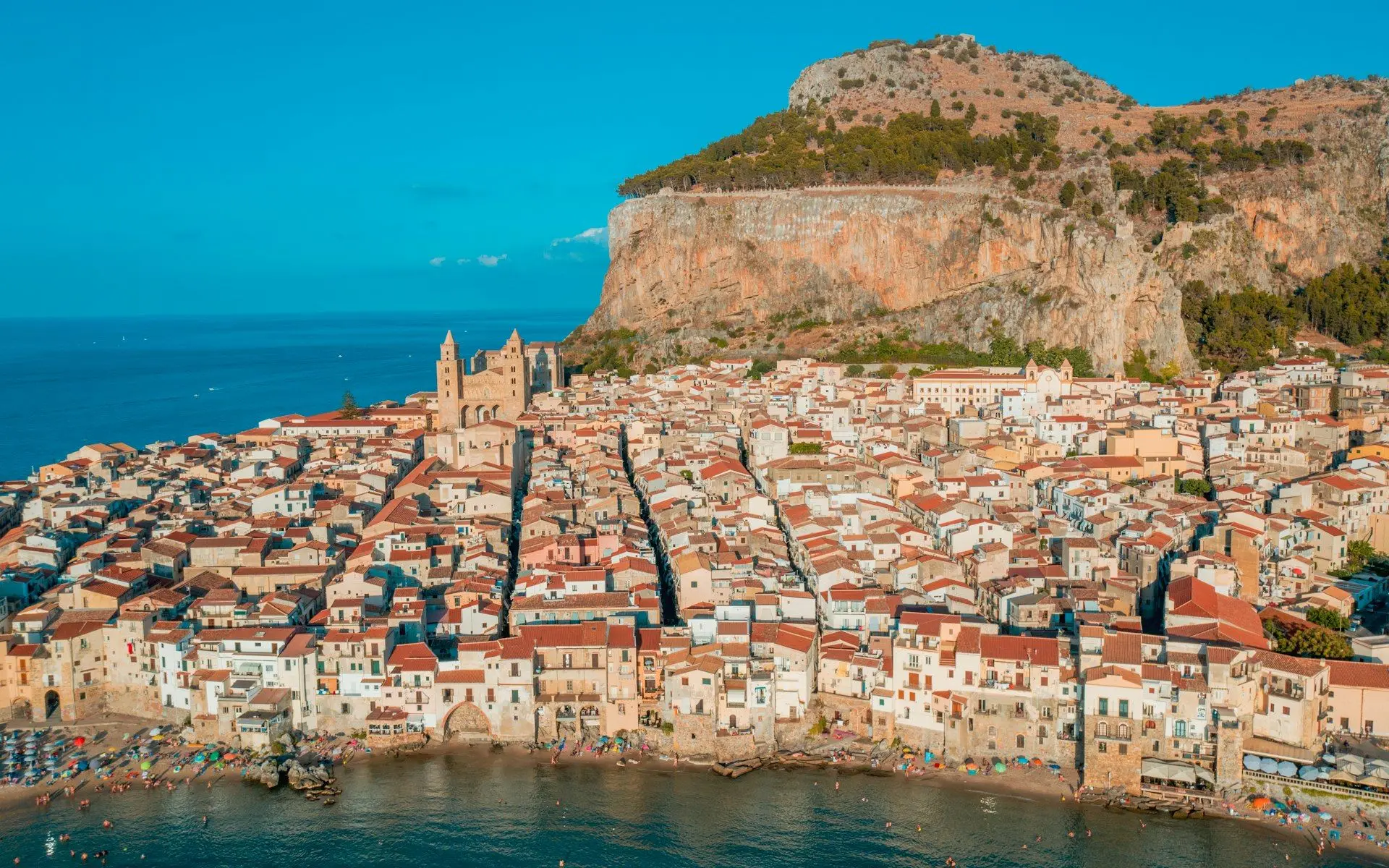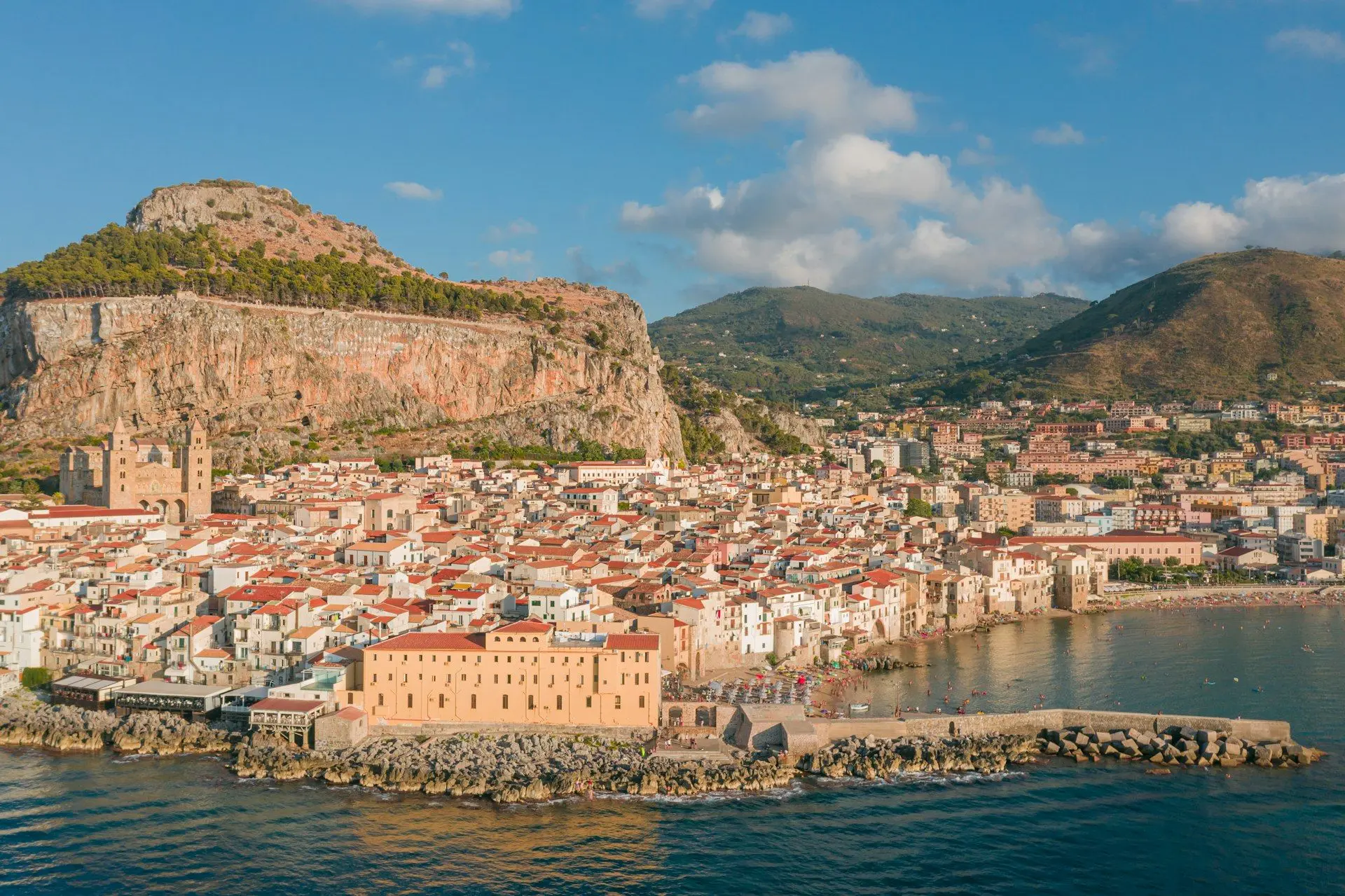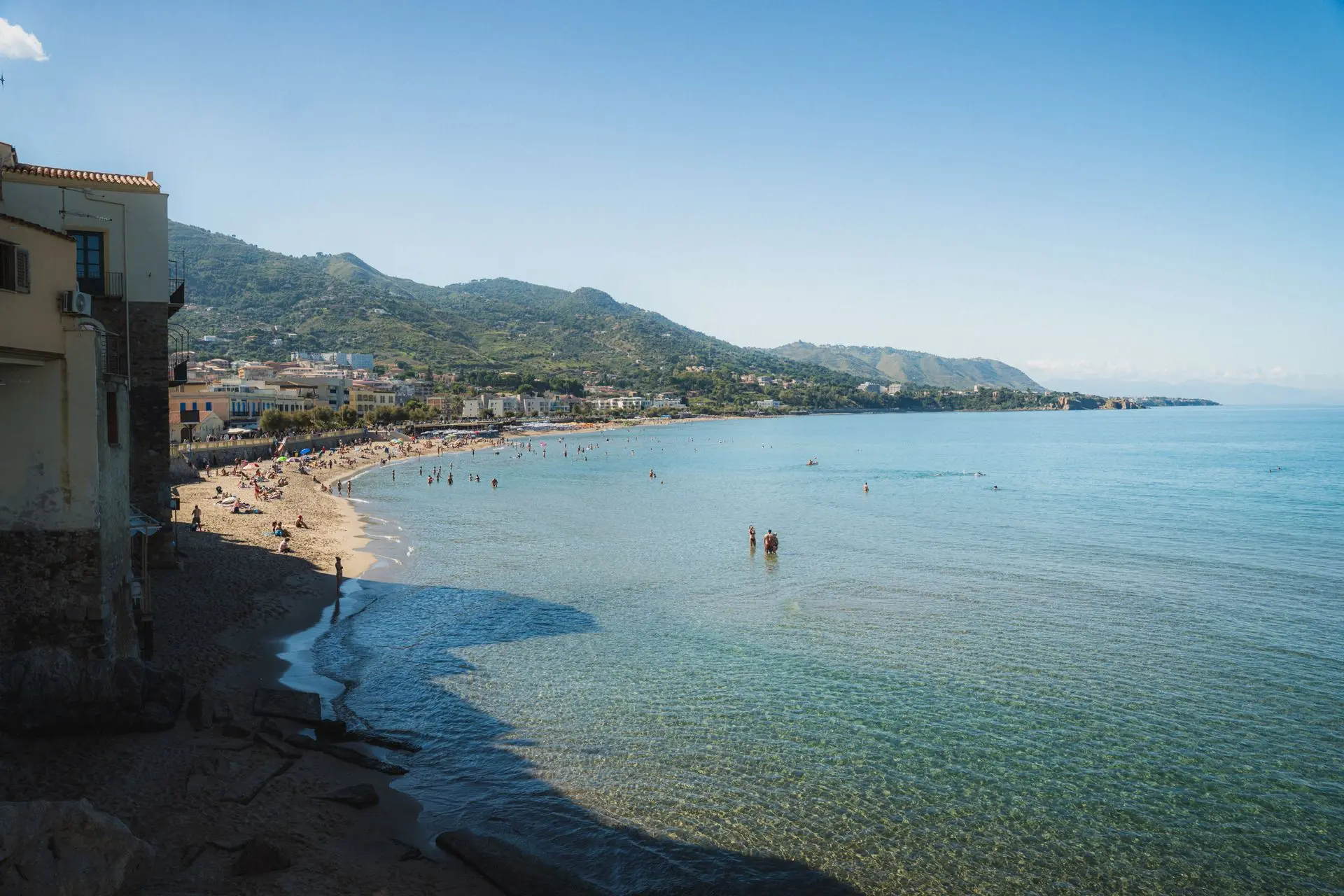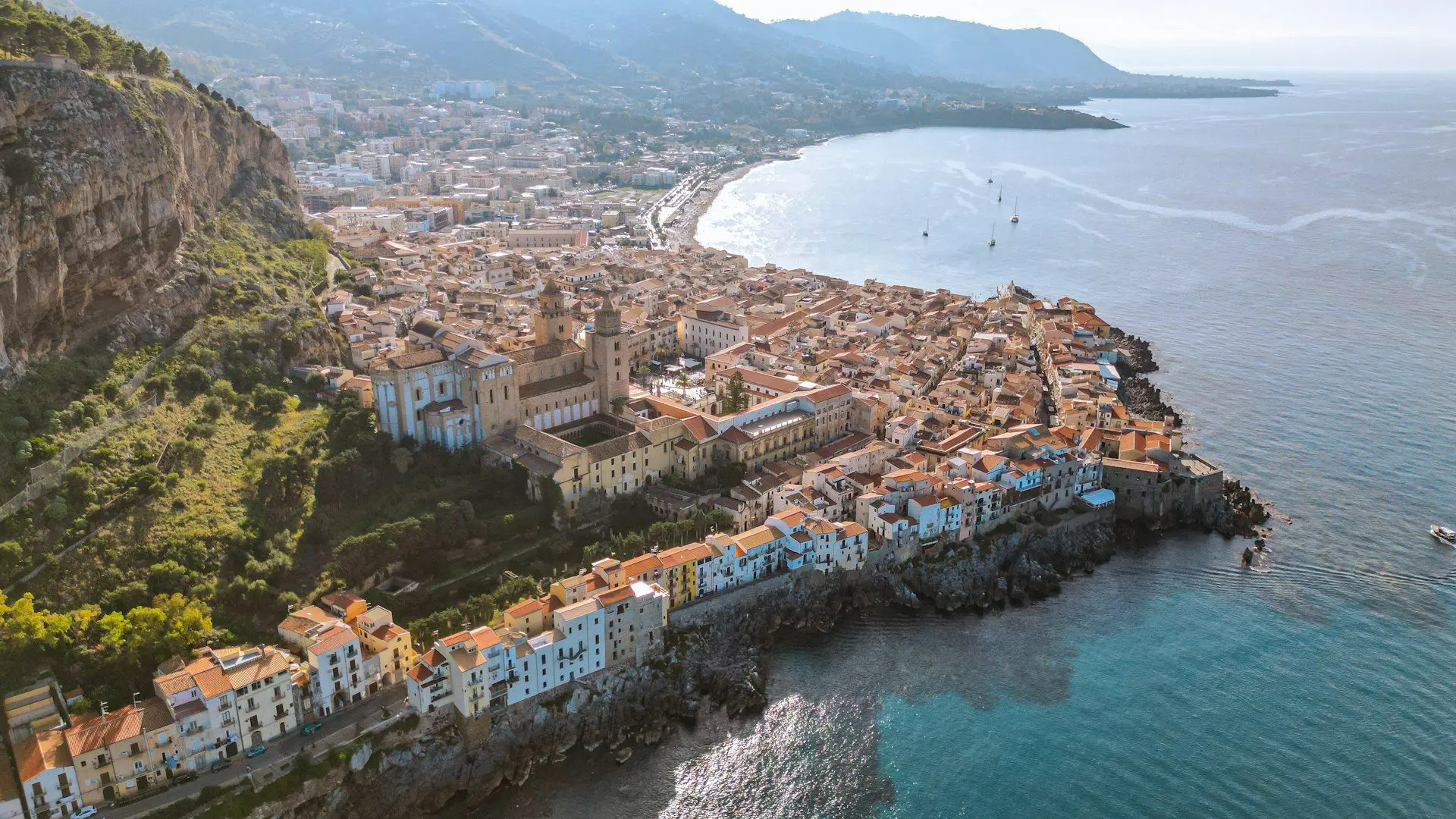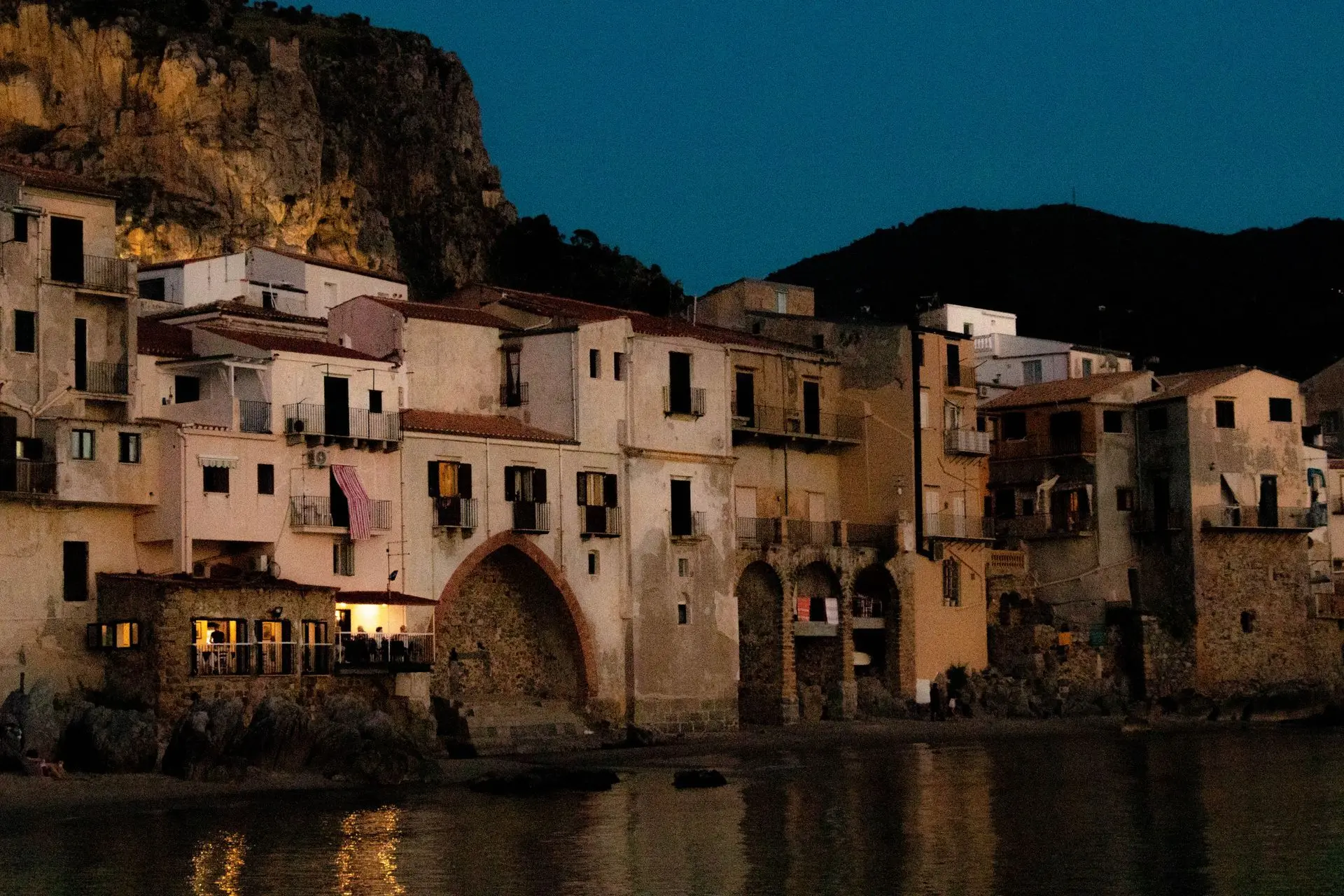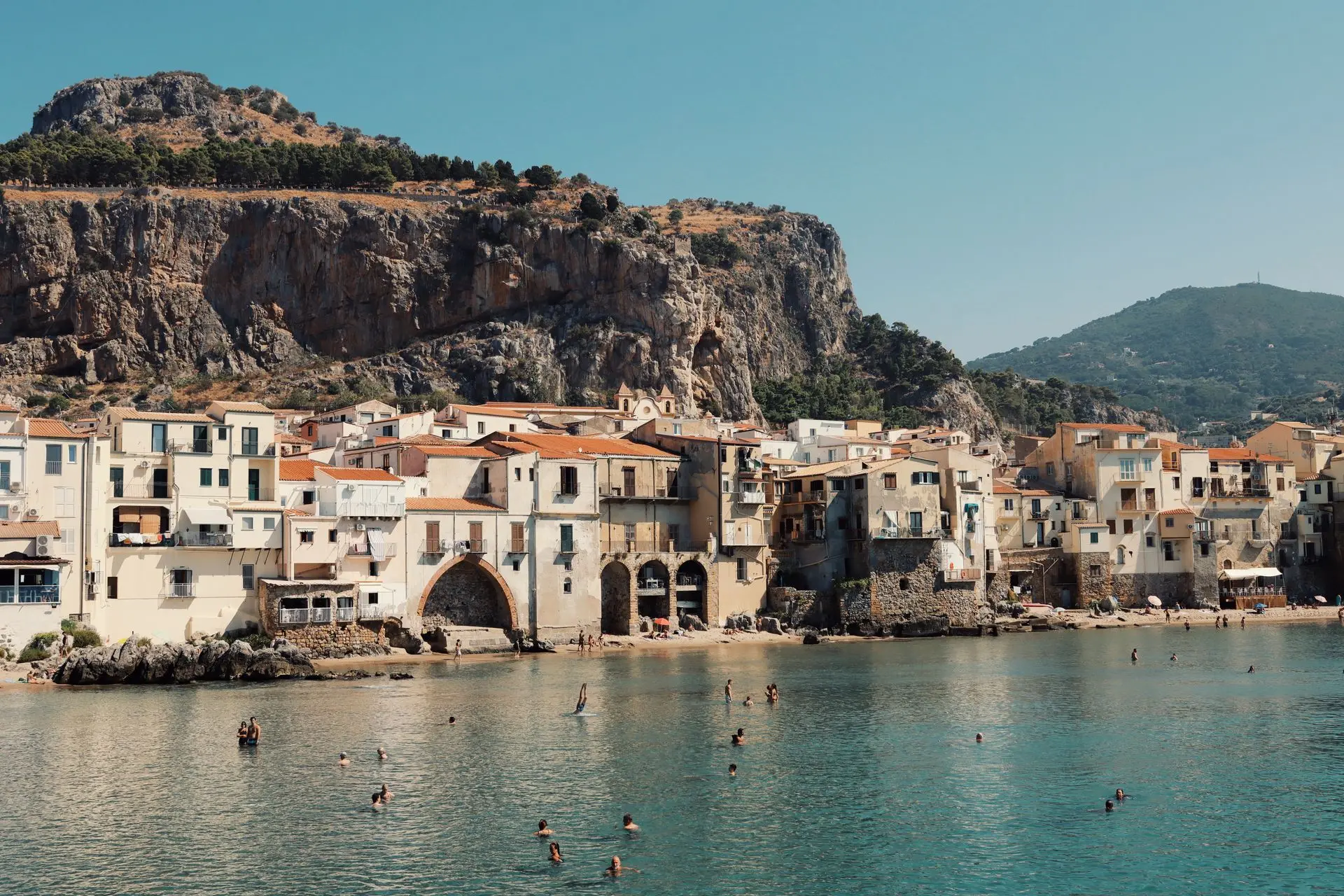
Nearly all of the Cefalù monuments worth seeing sit within a few hundred metres of each other, squeezed between the sea and the Rocca. This guide takes them one at a time, in more depth than our general overview of the town: the Norman cathedral, the palaces of Corso Ruggero, the wash-house, the sea gate and walls, the Temple of Diana. At the end you will find a walking route and some practical tips from us as local hosts.
By Alessandra, Giuseppe and Salvatore Livecchi · updated October 2026 · 6 min read
Cefalù Cathedral, the town's defining monument
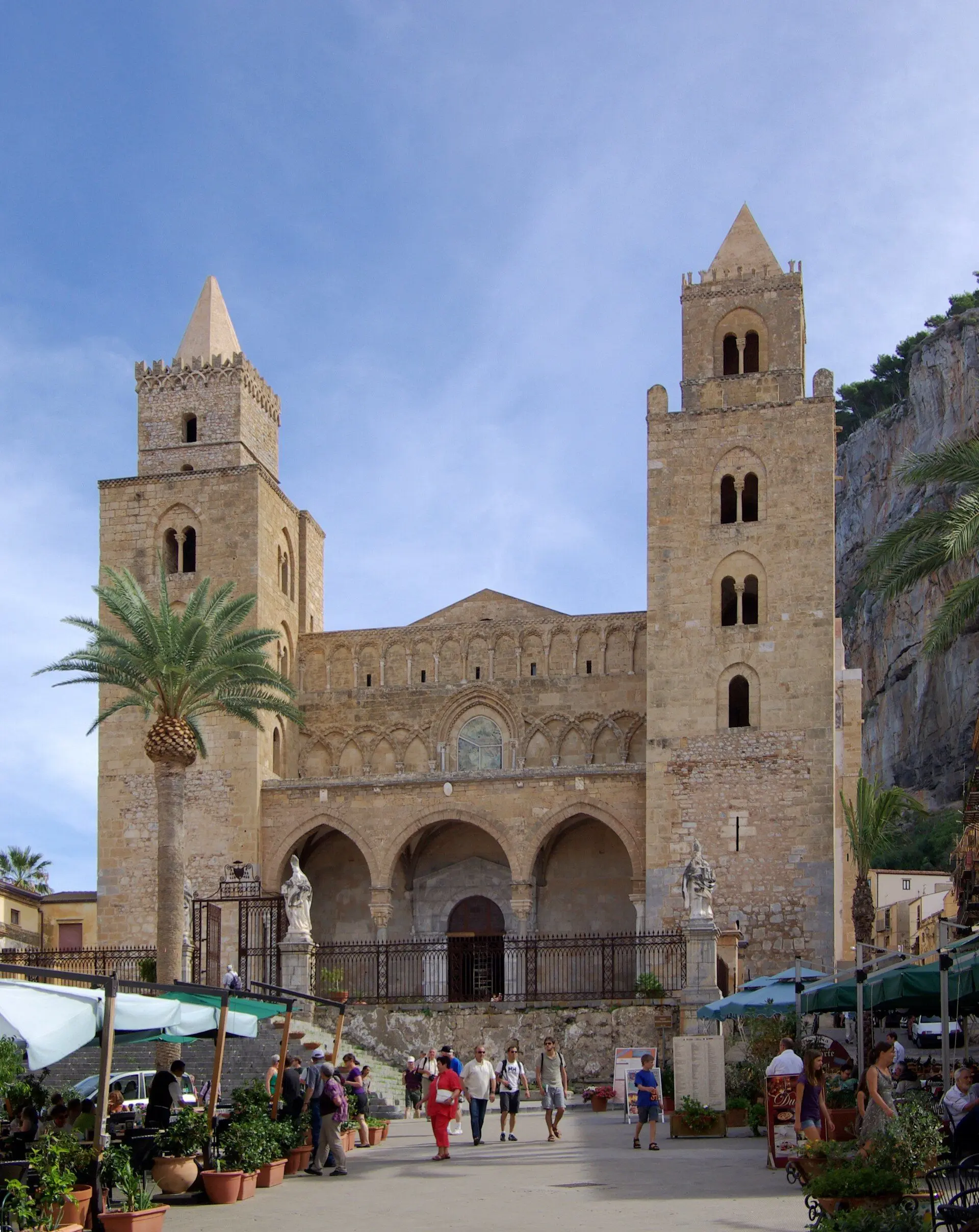
King Roger II began it in 1131. Tradition says he made a vow to the Holy Saviour after surviving a storm at sea, while historians see it as a dynastic church, which Roger also intended as his own burial place. His porphyry sarcophagi stayed empty, however, and in 1215 Frederick II had them moved to Palermo. The church was not formally consecrated until 1267.
Since 2015 the cathedral has been part of the UNESCO World Heritage Site Arab-Norman Palermo and the Cathedral Churches of Cefalù and Monreale, alongside eight other Norman-era monuments.
The mosaics and Christ Pantocrator
Step inside and your eyes go straight to the apse, where Christ Pantocrator looks down, with the Virgin, archangels and apostles below. The mosaics were made by Byzantine craftsmen, with a first phase completed by 1148 and work continuing in the following years. Outside, the façade between the two towers has a three-arched portico added in the 15th century by Ambrogio da Como.
The cloister and visitor routes
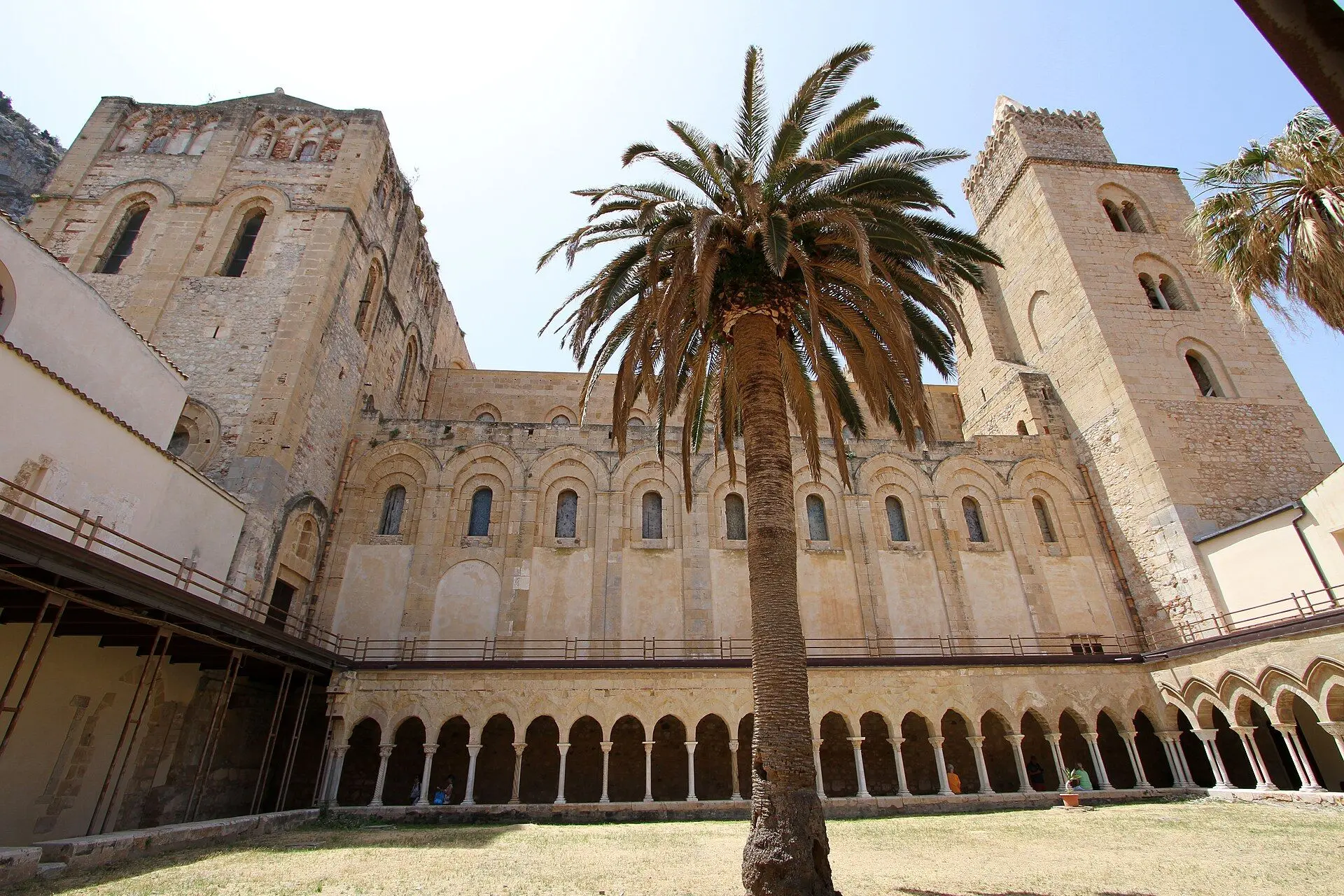
Next to the church is the canons' cloister, known for the carved capitals on its paired columns, some of the finest in medieval Sicily. The cloister, the treasury in the diocesan museum and the tower terraces are seen on ticketed visitor routes, which change from time to time, so check routes, prices and opening times before you go. Shoulders and knees must be covered to enter the church.
Piazza Duomo and the palaces around the cathedral
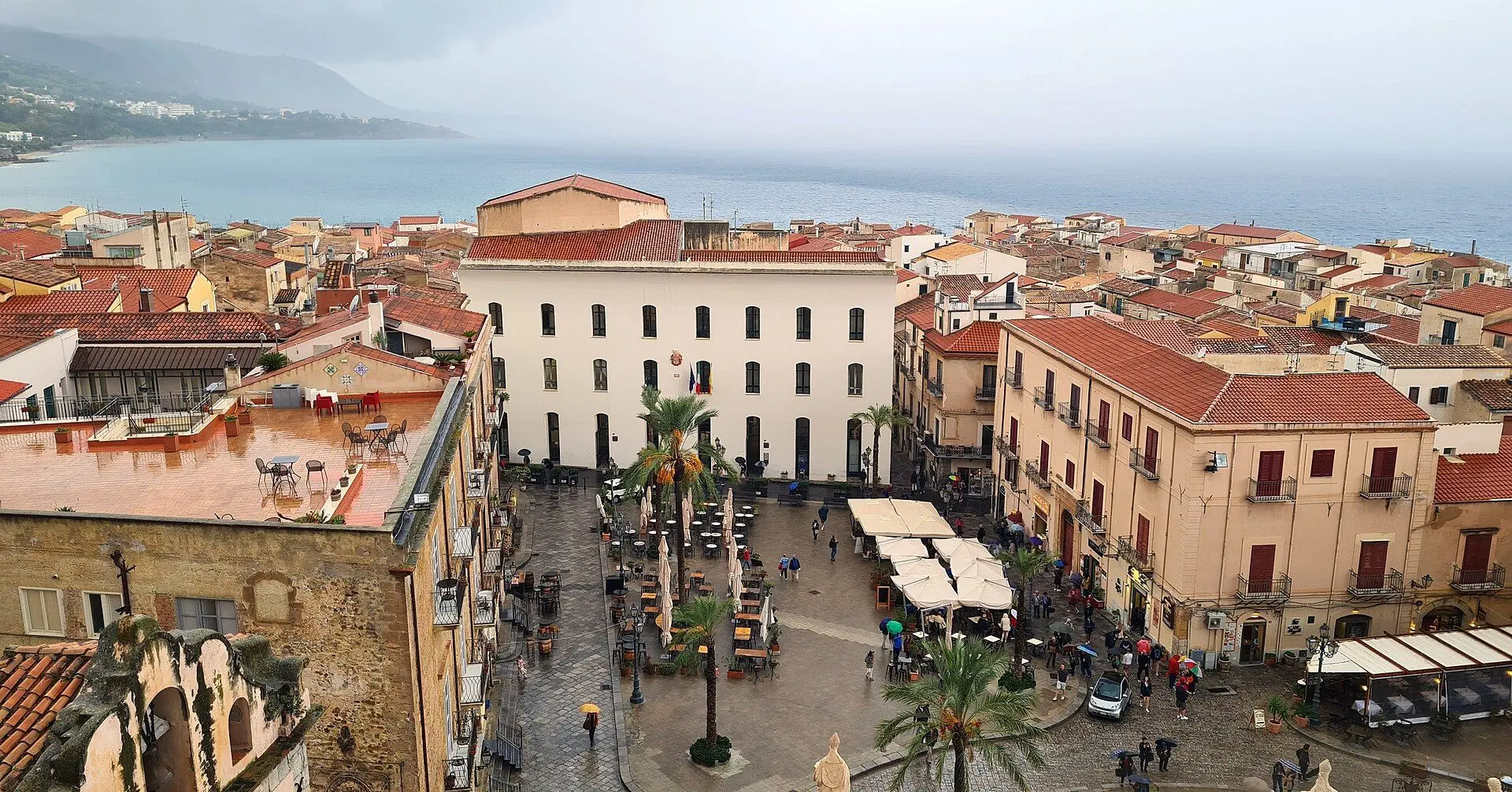
The square in front of the cathedral is the town's living room, with palm trees and café tables. On the cathedral side stands the Bishop's Palace, essentially 17th century. Opposite is the former Benedictine convent of Santa Caterina, medieval in origin and rebuilt in the 18th century, which has housed the town hall since the 1950s. Palazzo Piraino, a 16th-century building with a handsome doorway, also looks onto the square.
Our Casa del Duomo at Via Gioeni 10 is one minute's walk from here. Staying in the old town means you can be inside the cathedral as soon as it opens, before the tour groups, and come back to the square in the evening when the façade is lit up.
Corso Ruggero: Osterio Magno and historic churches
Corso Ruggero is the old town's main street, running from Piazza Garibaldi past the cathedral and beyond. Walk it slowly and you will pass some of the lesser-known but most rewarding monuments in town.
Osterio Magno
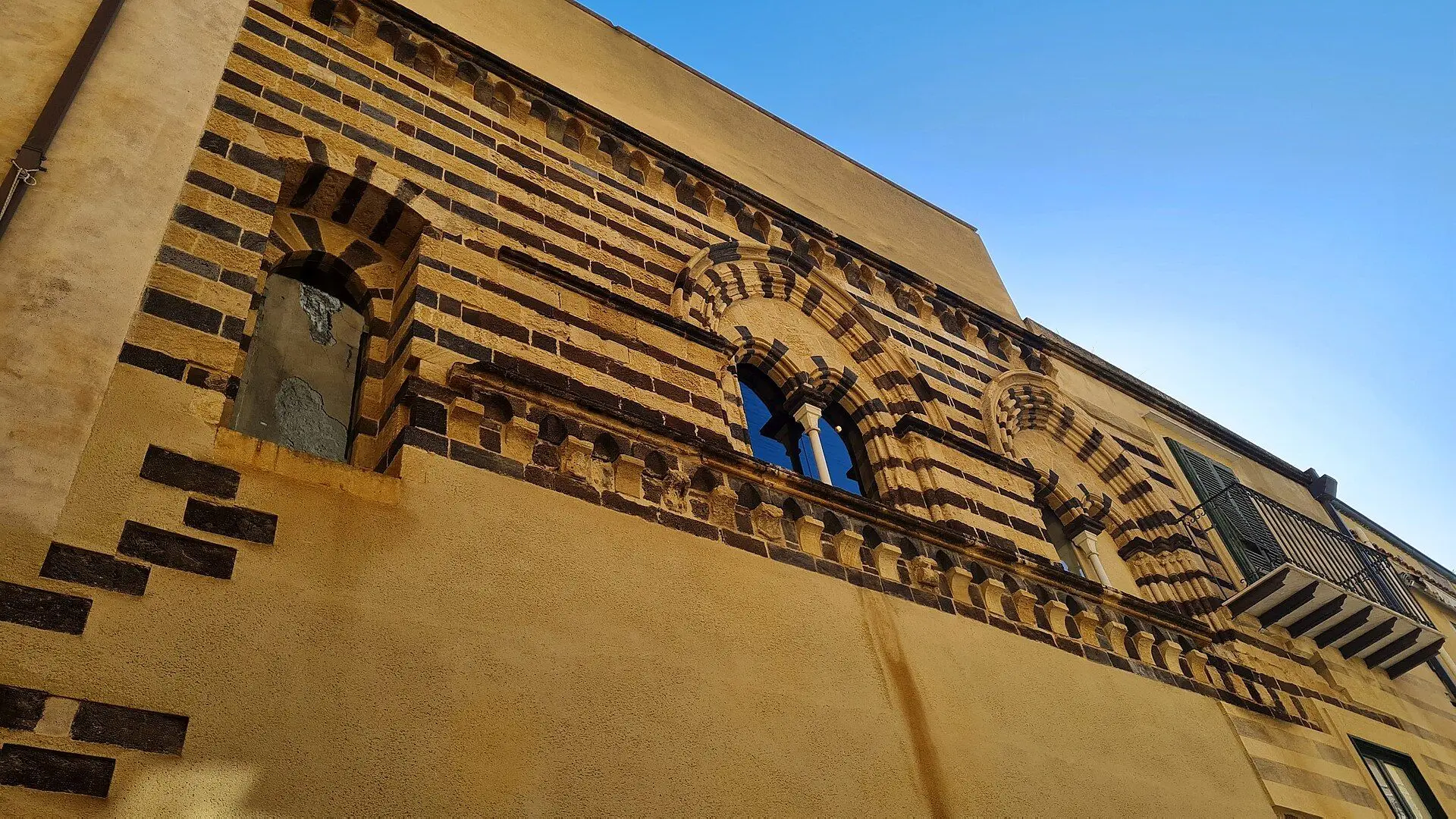
On the corner of Via Amendola stands the Osterio Magno, traditionally said to be Roger II's first residence in Cefalù. What you see today is mainly the 14th-century palace of the Ventimiglia family, with its large square tower, two- and three-light windows and a façade striped in pale stone and dark lava stone. Excavations have also uncovered far older structures beneath it. It is now used for temporary exhibitions.
Chiesa del Purgatorio (Santo Stefano Protomartire)
Set back on a small square off the Corso, this church is easy to spot thanks to its double staircase. Officially Santo Stefano Protomartire but known to everyone as the Purgatorio, it has a Baroque façade completed in 1668. Since 1867 it has held the tomb of Baron Enrico Pirajno di Mandralisca, founder of the museum described below.
Maria Santissima della Catena
On Piazza Garibaldi, where the landward gate once let travellers into town, the Catena church has an arched entrance loggia on paired pillars. It was completed in 1780, and the base of its bell tower still incorporates blocks from the ancient megalithic walls.
Museo Mandralisca and Antonello da Messina's portrait
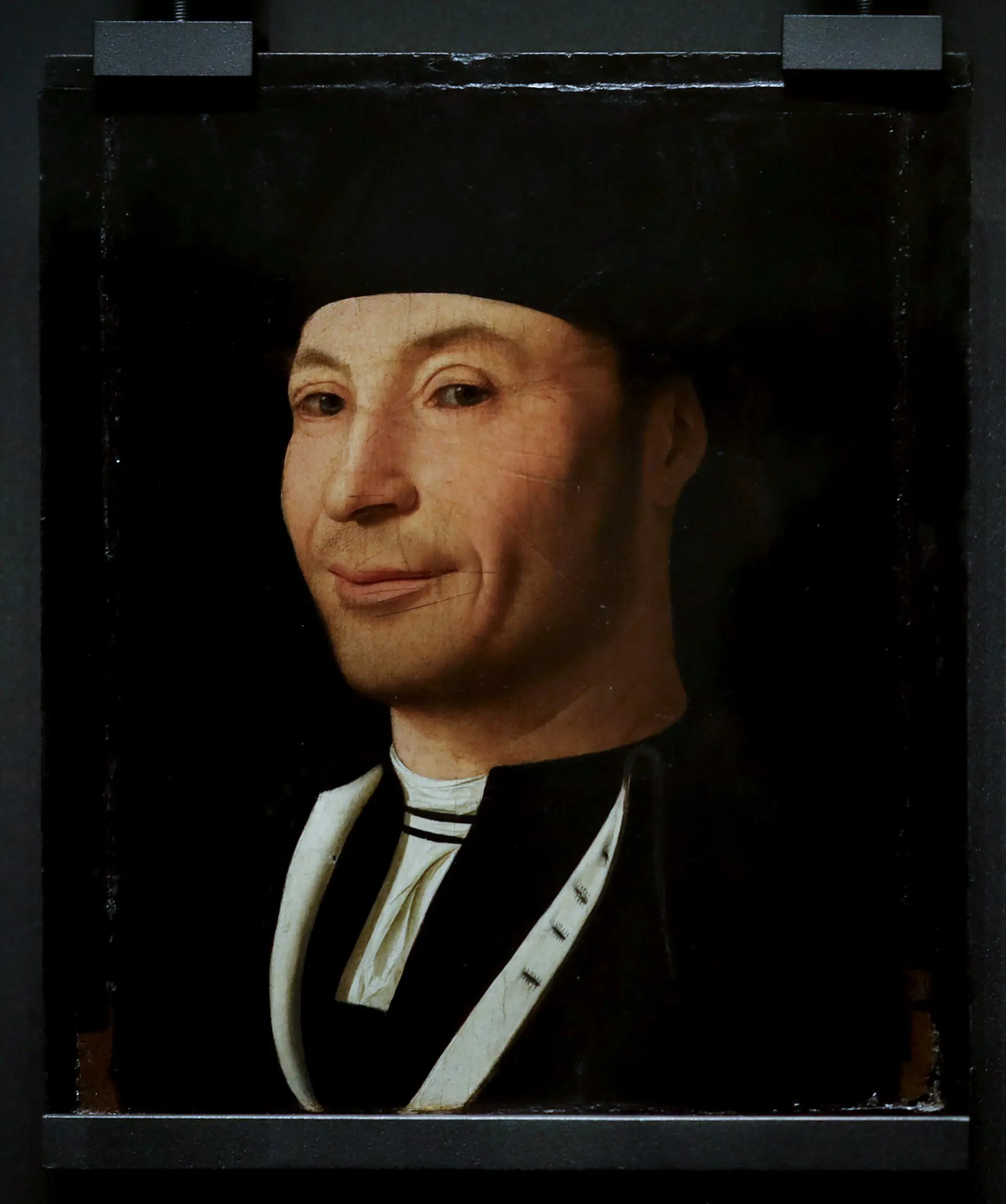
On Via Mandralisca, the narrow street running down from the cathedral towards the sea, is the museum built around the collection of Baron Enrico Pirajno di Mandralisca (1809-1864). The piece everyone comes for is Antonello da Messina's Portrait of an Unknown Man, a small oil on panel dating from around 1470. Its knowing smile inspired Vincenzo Consolo's novel The Smile of the Unknown Mariner, and many visitors know it as the Unknown Sailor.
The rest is worth your time too: a 4th-century BC red-figure krater showing a tuna seller, Greek pottery, Greek and Roman coins, thousands of shells and a collection of birds. For opening times and tickets, see the Comune di Cefalù page.
Monuments by the sea: wash-house, Porta Pescara and ancient walls
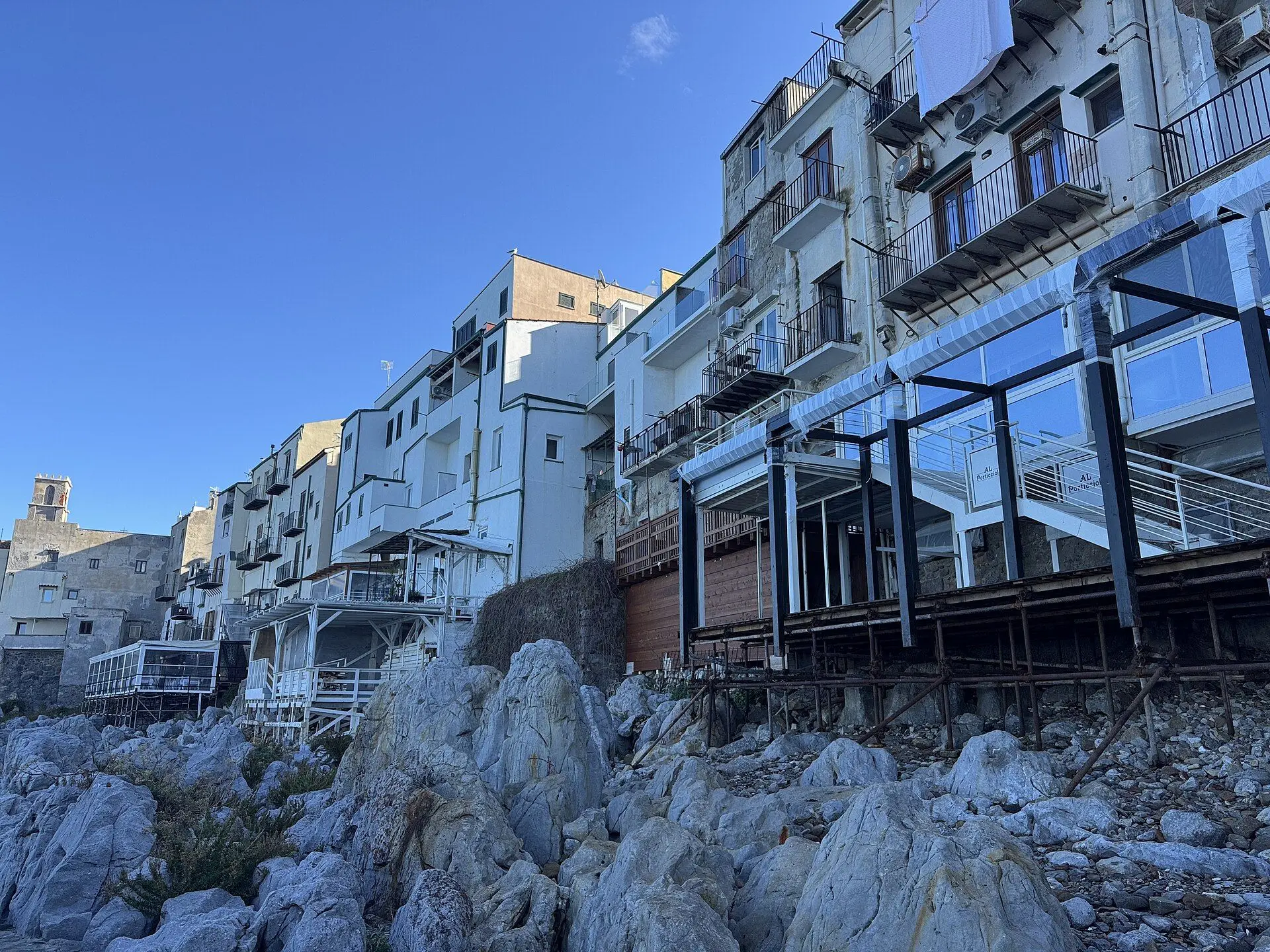
The north-facing side of the old town is where Cefalù's history is easiest to read, because this is where the town has always lived off the sea.
The medieval wash-house
On Via Vittorio Emanuele, a lava-stone staircase leads down to the lavatoio, fed by the Cefalino river, which runs beneath the town. In its present form it dates from the 16th century: water pours from twenty-two cast-iron spouts, many shaped as lions' heads, fills the basins and then drains straight into the sea.
Porta Pescara and the old harbour
Of the four gates that once opened in the town walls, Porta Pescara is the only one left. Its Gothic arch leads straight onto the little beach of the old harbour, with fishing boats pulled up on the sand. It was enlarged in 1570 on the orders of the viceroy Ferdinando d'Avalos, Marquis of Pescara, who gave it its name.
The megalithic walls
Between Porta Pescara and the bastion, around Piazza Marina, you can see huge blocks from the megalithic walls, dated to the 5th and 4th centuries BC. They are the oldest evidence of the fortified town, and most people walk straight past them.
The Bastione di Capo Marchiafava
At the northern tip of the old defences is the Capo Marchiafava bastion, completed in 1642 and now a terrace over the sea. The name is traditionally said to combine the Arabic marsa, harbour, with favara, spring. On clear days you can make out the Aeolian Islands, and this is where locals come to watch the sunset; our guide to the best things to do in Cefalù explains how to enjoy it.
The Rocca: Temple of Diana and fortifications
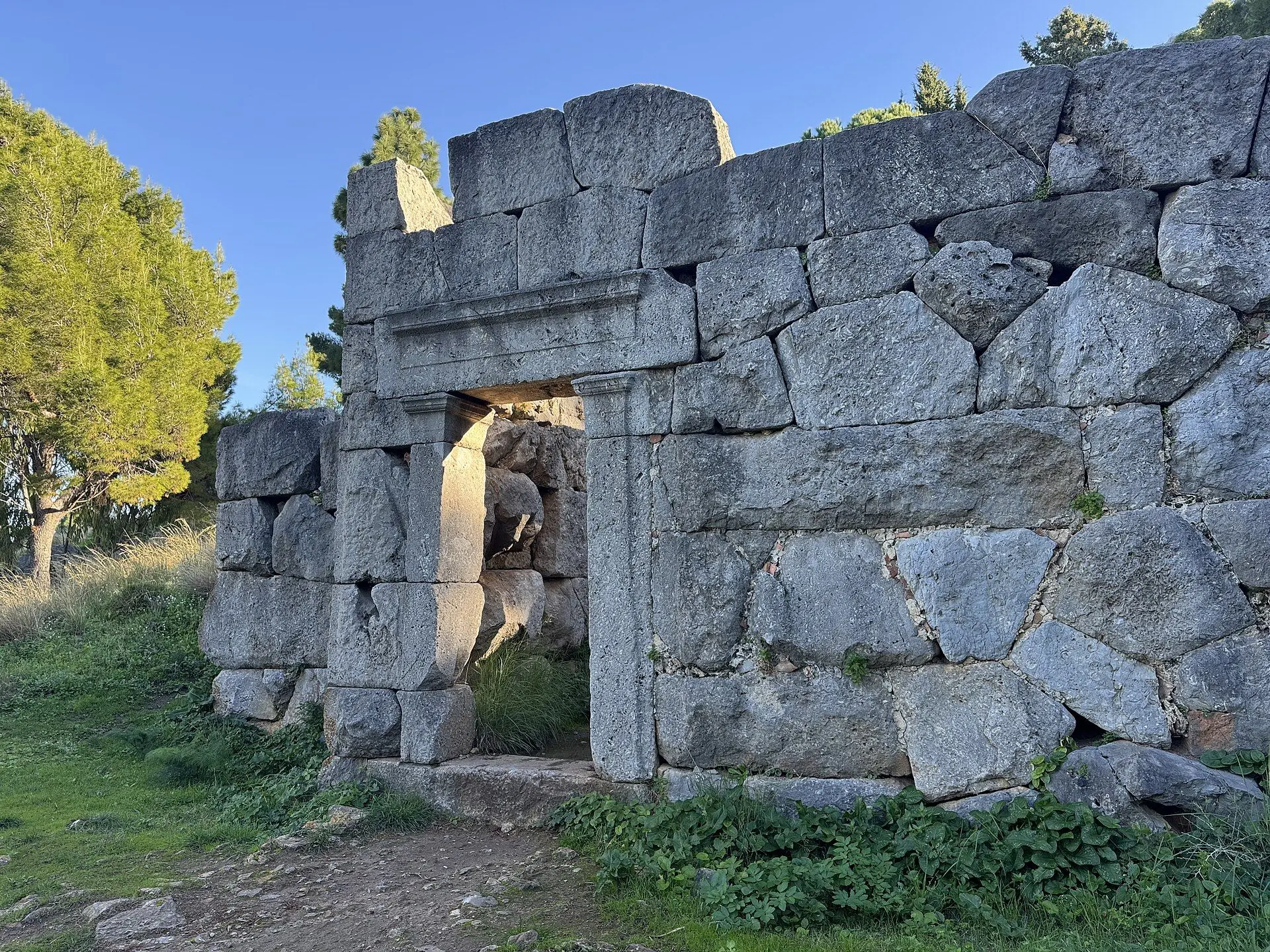
The Rocca, 268 metres high, is the natural landmark towering over the town, and it holds Cefalù's oldest remains. The path starts from Via Salita Saraceni and climbs past crenellated Byzantine and medieval walls.
Halfway up you reach the Temple of Diana, a megalithic building linked to an ancient water cult, whose date scholars still debate. Higher up are the ruins of the medieval castle. There is an entrance fee and opening times vary by season; practical details for the climb are in our guide to things to do in Cefalù.
A walking route through the Cefalù monuments
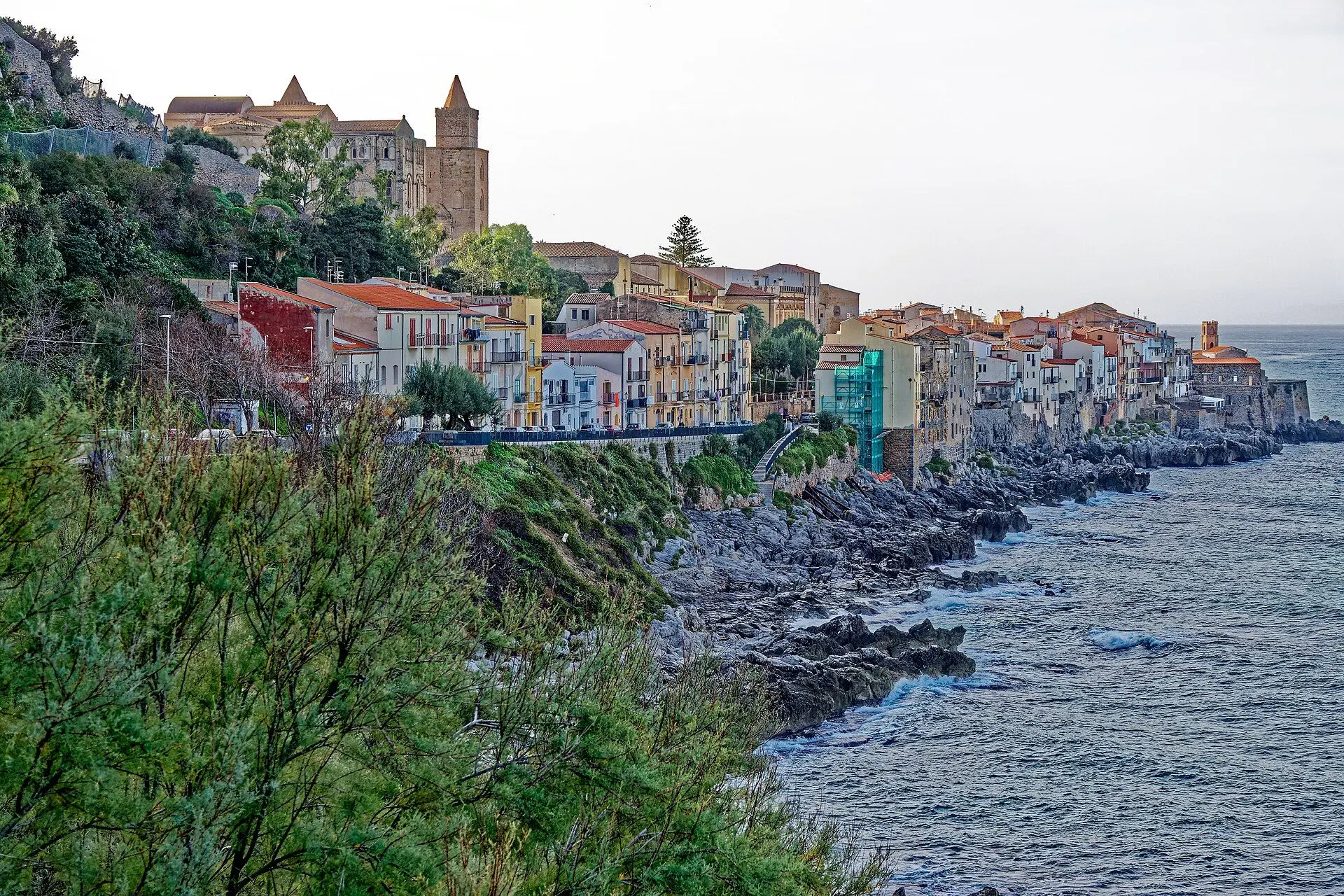
This is the order we suggest to our guests for seeing the monuments in a day. Climb the Rocca first thing, before the heat builds. Back in town, start from Piazza Garibaldi and the Catena church, walk along Corso Ruggero stopping at the Osterio Magno and the Purgatorio, and reach Piazza Duomo for the cathedral and its cloister.
After lunch, head down Via Mandralisca to the museum, then along Via Vittorio Emanuele to the wash-house, on to Porta Pescara and the old harbour, past the megalithic walls, and finish at the Capo Marchiafava bastion for sunset. Distances are short, but the streets are paved with stone and often uphill, so wear comfortable shoes, carry water in summer and check the latest opening times for museums and churches, as they change often.
Out of town: the Monument for a Dead Poet
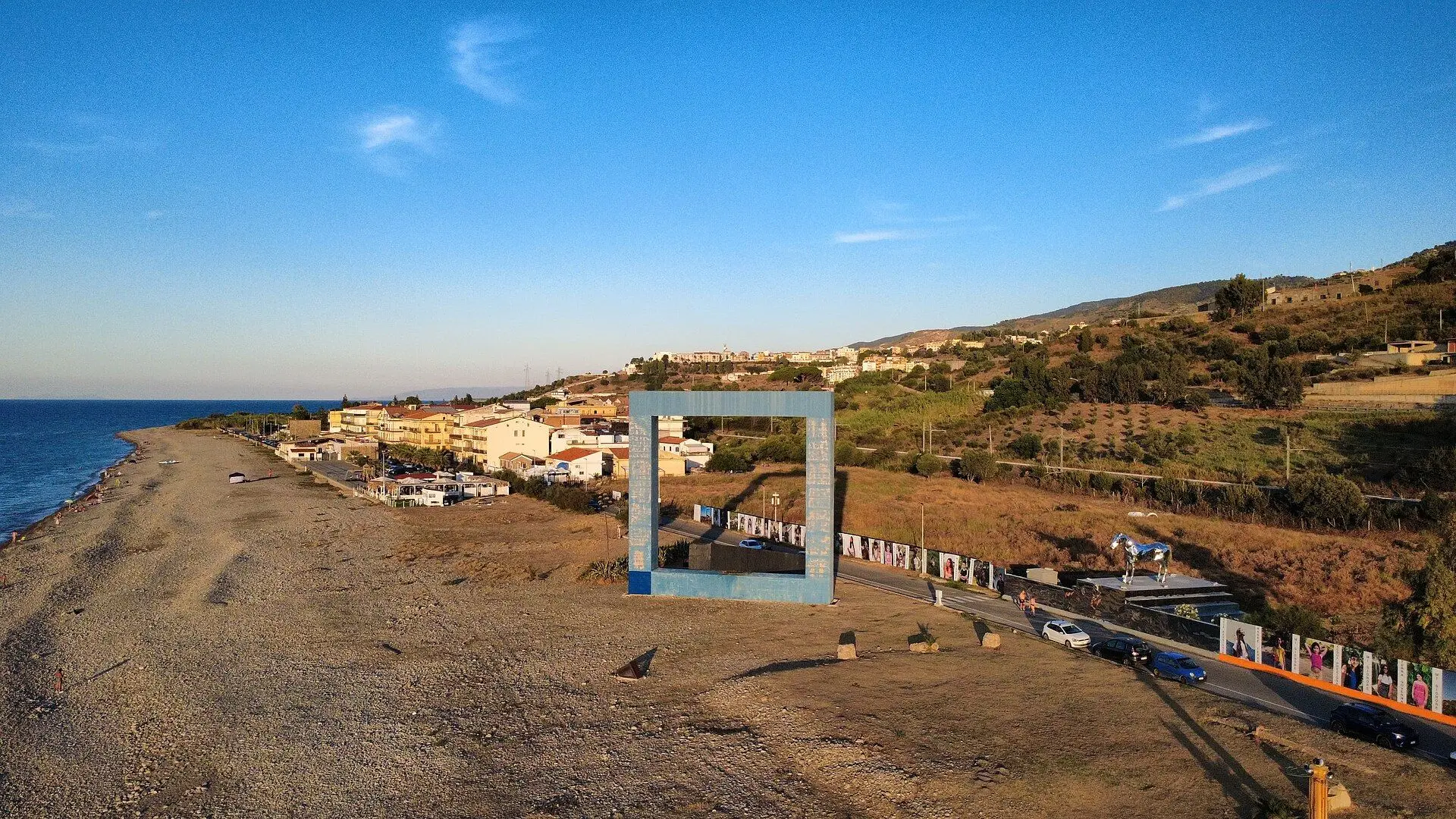
Many visitors look for Tano Festa's Monument for a Dead Poet, the huge blue window framing the sea, in Cefalù. The 1989 work is part of the Fiumara d'Arte open-air sculpture park and stands on the seafront at Villa Margi, part of Reitano in the province of Messina, under an hour's drive east. Festa dedicated it to his brother, the artist Francesco Lo Savio. It makes a lovely half-day outing; see our guide to day trips from Cefalù for more ideas.